
What's Happening?
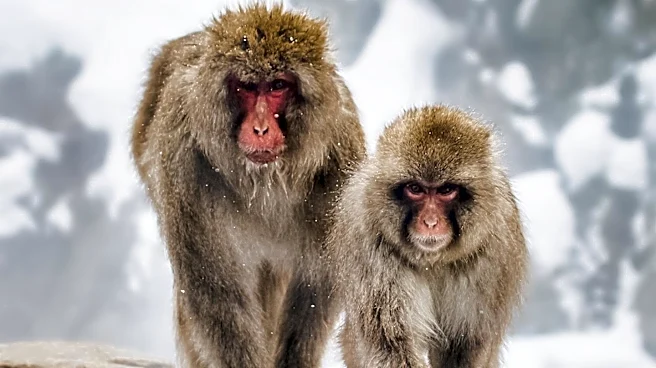
New research indicates that macaques in a Texas sanctuary developed increased germaphobia following an outbreak of an HIV-like virus (SRV) in 2020, mirroring human behavioral changes during the COVID-19
pandemic. Stephan Kaufhold, a cognitive scientist at UC San Diego, and his colleagues observed that macaques who experienced the outbreak, either by getting sick or witnessing others fall ill, were significantly more cautious about consuming food placed on a simulated pile of feces. In an experiment conducted between 2022 and 2024, researchers offered macaques a choice between a grape on a clean piece of wood and a grape on an epoxy-encased macaque poop. While 79% of macaques who had not experienced the outbreak ate the 'poop-plated' grape, only 47% of those who lived through the outbreak did so. This suggests that direct or indirect exposure to a pathogen can lead to a heightened sensitivity to disgust and increased avoidance behaviors, even if the mode of transmission for the original virus was different from fecal contamination, according to HPPR.
Why It's Important?
This study offers valuable insights into the evolutionary origins and flexibility of germ avoidance behaviors in primates, including humans. The findings suggest that the psychological and behavioral responses observed in humans during the COVID-19 pandemic, such as increased hygiene practices and avoidance of perceived contaminants, are not unique to our species but are rooted in deeper evolutionary mechanisms shared with other primates. Understanding these mechanisms can help explain why societies react to outbreaks in certain ways and how these behaviors might be adaptive. For public health, this research underscores the importance of considering psychological factors in disease prevention strategies. It highlights that past exposure to health threats can lead to long-lasting changes in behavior, which could be beneficial in preventing future infections. The study also contributes to the broader field of cognitive science by exploring the concept of disgust as an evolutionary protective mechanism against pathogens, suggesting that it can be modulated by environmental experiences.
What's Next?
Future research will likely delve deeper into the neurological and physiological underpinnings of this heightened germaphobia in macaques. Scientists may investigate the specific brain regions and hormonal changes associated with increased disgust sensitivity after an outbreak. Further studies could also explore the long-term persistence of these behavioral changes and whether they are transferable to other types of contaminants or threats. Researchers might also design experiments to differentiate between learned avoidance and an innate, generalized increase in disgust. Additionally, comparative studies with other primate species or even other social animals could provide a broader understanding of how different species adapt their hygiene and avoidance behaviors in response to disease threats. The findings could also inform strategies for communicating public health messages, emphasizing the evolutionary basis of certain protective behaviors to encourage compliance during future pandemics.
Beyond the Headlines
The study's implications extend beyond animal behavior and public health, touching upon the ethical considerations of animal research and the philosophical understanding of consciousness. While scientists cannot definitively know if macaques experience 'disgust' in the human sense, the observed behavioral changes suggest a complex cognitive response to perceived threats. This raises questions about the emotional lives of animals and the continuity of psychological traits across species. Ethically, the research highlights the need for careful consideration of animal welfare in studies involving potential stressors like simulated contaminants. Culturally, the study provides a scientific lens through which to view human reactions to pandemics, suggesting that seemingly irrational behaviors like wiping down groceries might be an evolutionary-driven, albeit sometimes misdirected, attempt to protect oneself. This understanding could foster greater empathy and reduce judgment towards diverse human responses during health crises, recognizing them as part of a shared biological heritage.