

What's Happening?
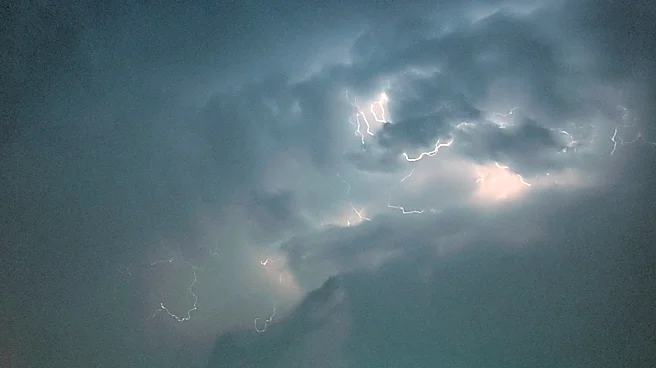
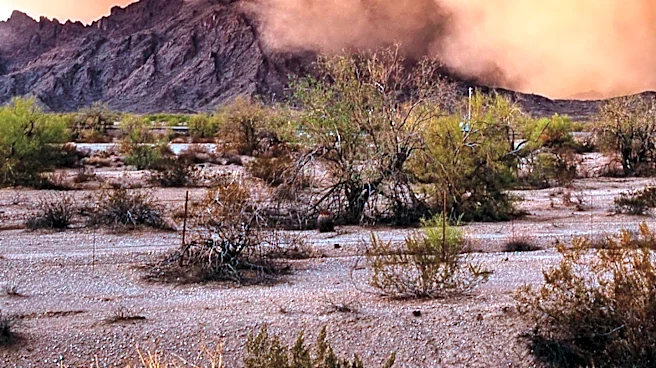
Clark County has issued a dust advisory for Southern Nevada as winds from thunderstorms in Arizona have caused dust to blow into the region. The advisory, announced by the Clark County Environment & Sustainability’s Division of Air Quality, is set to expire
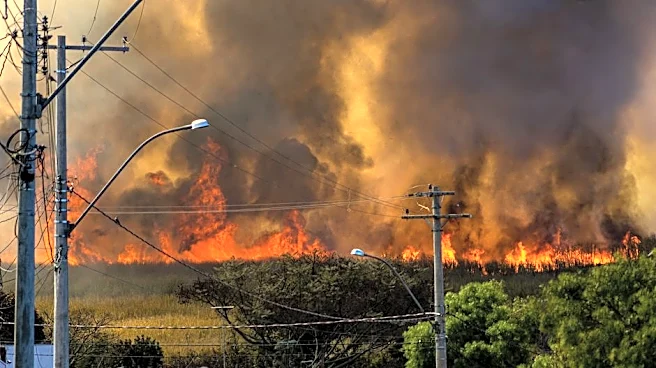
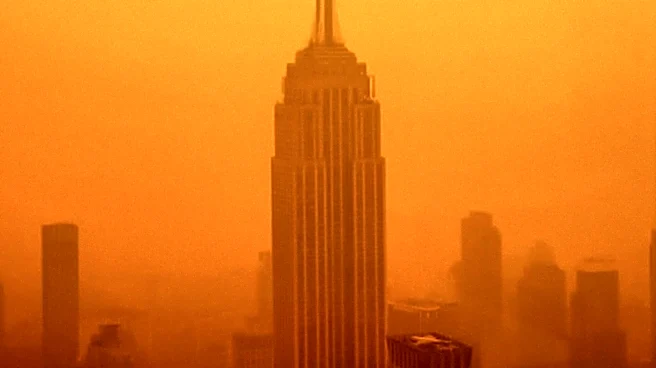
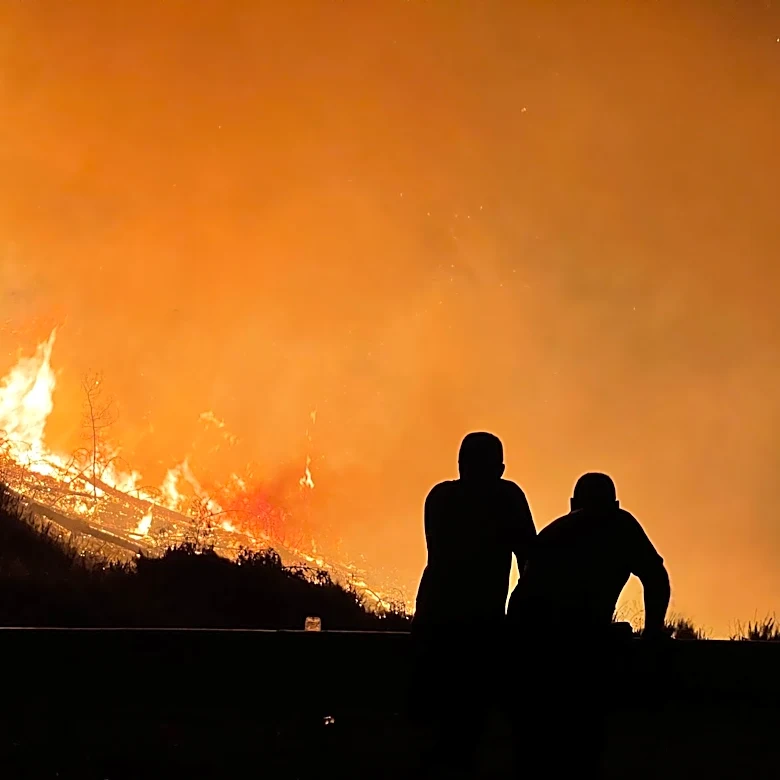
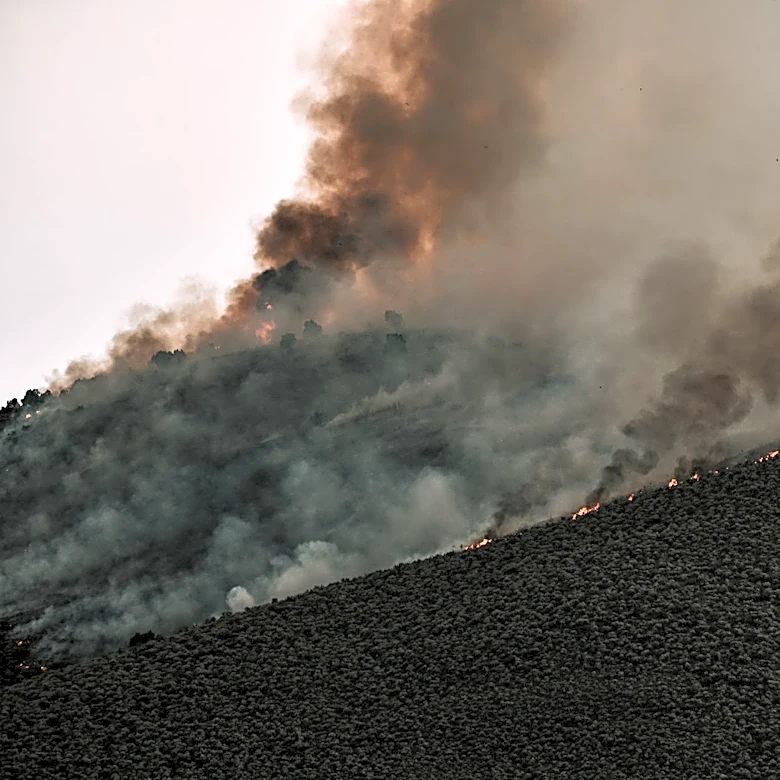
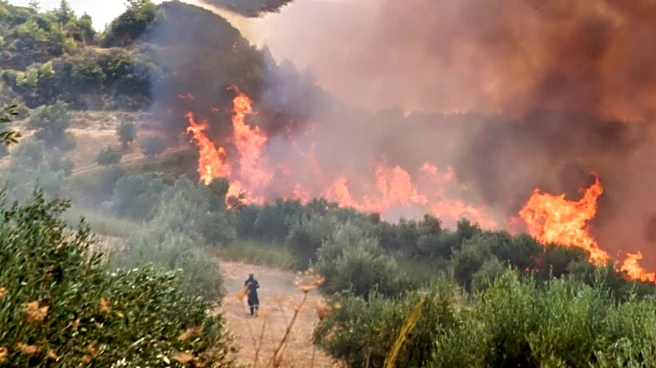
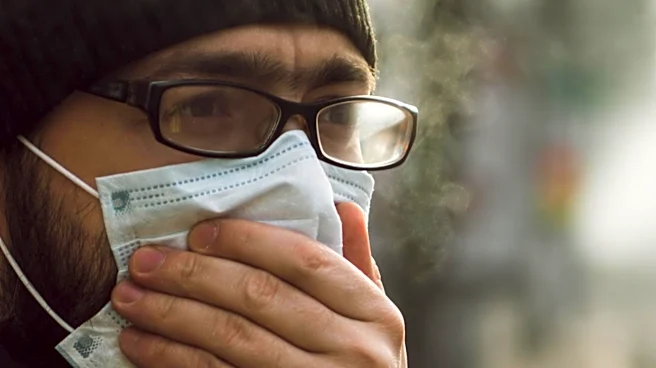
at midnight. The dust, a form of particulate matter, poses a risk to individuals with respiratory conditions, heart disease, older adults, and children, especially during physical activity. The advisory comes amid an ongoing seasonal ozone and wildfire smoke advisory, which remains in effect until September 30. The county advises residents to limit outdoor activities, keep windows and doors closed, and use air conditioning to filter out particulates. The situation is being monitored to determine if the advisory needs to be extended.
Why It's Important?
The dust advisory highlights the impact of weather patterns on air quality and public health in Southern Nevada. Particulate matter from dust can exacerbate respiratory and cardiovascular conditions, posing significant health risks to vulnerable populations. The advisory underscores the need for public awareness and preparedness in managing air quality issues, particularly in regions prone to dust storms and wildfires. The situation also reflects broader environmental challenges, as changing weather patterns and increased wildfire activity contribute to air quality concerns. The advisory serves as a reminder of the interconnectedness of regional weather events and their potential to affect public health and safety.
What's Next?
The Division of Air Quality will continue to monitor weather conditions overnight and into the early morning to assess whether the dust advisory should be extended into Tuesday. Residents are encouraged to stay informed about air quality updates and take precautions to minimize exposure to dust. The county's Environment and Sustainability department provides a hotline for reporting excessive dust from construction sites and other sources, emphasizing community involvement in addressing air quality issues. As the advisory remains in effect, local authorities may implement additional measures to protect public health if conditions worsen.