




What's Happening?
A coalition of 57 countries, formed to accelerate the global transition away from fossil fuels, is moving forward with its agenda despite the withdrawal of Colombia, one of its founding members. The coalition, which originated from the Santa Marta conference
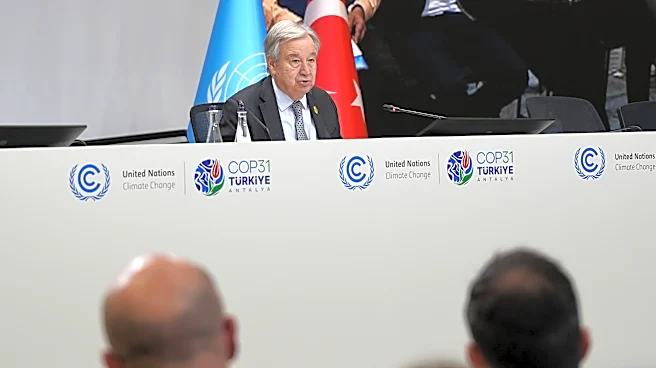
in April, is set to release a progress report at the ongoing COP31 UN climate talks in Antalya, Turkey. This report will detail steps taken by participating nations, including new national plans to reduce reliance on coal, oil, and gas. Ireland and the Pacific island nation of Tuvalu are preparing to assume leadership of the initiative from Colombia and the Netherlands, with a second international conference scheduled for July 2027. Colombia's withdrawal follows the election of President Abelardo de la Espriella, who has prioritized strengthening the country's oil and gas industry, a shift from his predecessor's environmental agenda. The coalition aims to translate international commitments into concrete national policies, though its agreements are voluntary and non-binding.
Why It's Important?
The continued efforts of this coalition, even with Colombia's withdrawal, underscore the persistent global push to transition away from fossil fuels, a movement with significant implications for the U.S. The U.S., as a major fossil fuel producer and consumer, is directly affected by international climate policies and the global energy transition. The coalition's focus on national roadmaps and policies could influence U.S. domestic energy strategies, potentially accelerating investments in renewable energy and discouraging new fossil fuel projects. The shift in leadership to Ireland and Tuvalu highlights the growing influence of nations particularly vulnerable to climate change, which could lead to more ambitious and urgent calls for action that the U.S. will need to address in its foreign policy and climate diplomacy. The voluntary nature of the coalition's commitments, however, also reflects the challenges in achieving binding international agreements, a dynamic that the U.S. often navigates in its own climate policy decisions. The debate at COP31 over formally recognizing a global fossil fuel transition roadmap could set precedents for future international climate negotiations, impacting U.S. economic and environmental interests.
What's Next?
The coalition is expected to formally announce the handover of leadership to Ireland and Tuvalu during COP31. A second international conference is planned for July 2027, where participating governments will be under pressure to demonstrate tangible progress beyond mere announcements. At COP31, negotiators are also considering whether to formally recognize a global fossil fuel transition roadmap, developed by Brazil's COP30 presidency, and establish a process for integrating its recommendations into future climate negotiations. The voluntary nature of this roadmap means that individual governments will need to establish clear timelines and implement concrete policies to achieve meaningful reductions in fossil fuel production and consumption. Financing remains a critical obstacle, particularly for developing countries, and international support will be crucial for them to diversify their economies. The coalition also faces the challenge of attracting major fossil fuel producers to broaden its impact on global energy policy.
Beyond the Headlines
Colombia's withdrawal from the coalition highlights the complex political and economic realities that often impede global climate action. The change in presidential administrations demonstrates how domestic priorities, such as energy security and economic development, can sometimes override international climate commitments. This situation underscores the fragility of voluntary international agreements and the need for sustained political will across different governments. The coalition's continued efforts, despite this setback, reflect a growing momentum among a subset of nations committed to a fossil fuel phase-out. However, the effectiveness of such initiatives without the full participation of major fossil fuel producers remains a critical question. The debate also touches on the concept of 'just transition,' where vulnerable countries require significant international support to shift away from fossil fuels without jeopardizing their economic stability. The long-term success of this coalition, and similar initiatives, will depend on their ability to overcome these political and economic hurdles, fostering genuine collaboration and tangible policy changes rather than just aspirational goals.