





What's Happening?
A United Nations expert, Francesca Albanese, has issued a warning that Israel's ongoing clearance of rubble in Gaza could lead to the destruction of crucial evidence related to "atrocity crimes" and hinder efforts to recover human remains. Following the October
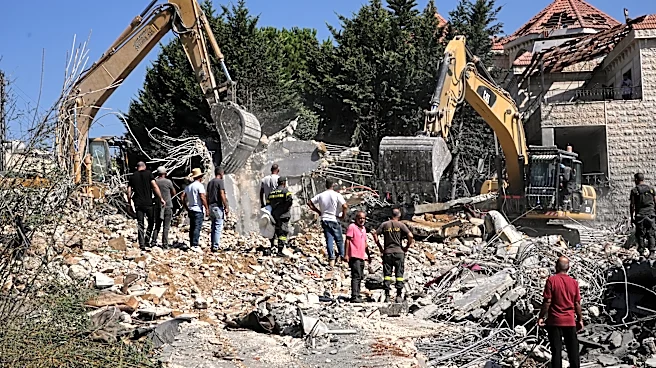
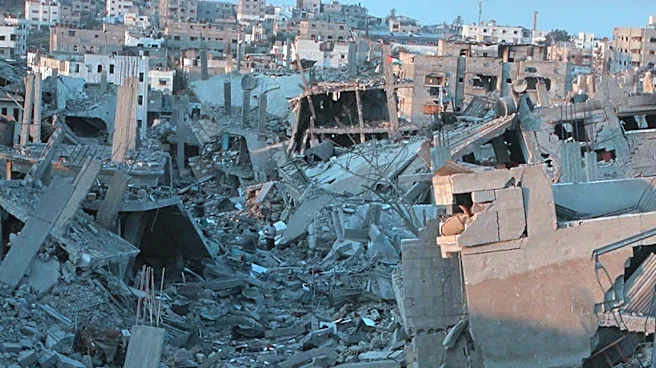
2023 Hamas raid into Israel, the Israeli assault on Gaza has resulted in approximately 61 million tons of wreckage and debris, which the UN estimates could take seven years to clear. Albanese, the UN expert on Palestinian territories, emphasized that evidence should be collected and human remains identified before comprehensive clearance operations commence. She stated that the rubble in Gaza is not merely construction waste but constitutes a crime scene, a graveyard, and a material record of the events during the two-year bombing campaign. Albanese also noted that multiple sources have indicated the involvement of Israeli companies in the clearance, though her office did not immediately provide details on these sources. Israeli officials have not yet responded to requests for comment regarding these concerns.
Why It's Important?
This warning from a UN expert carries significant international implications, particularly concerning accountability and justice in the context of the conflict in Gaza. The potential destruction of evidence could severely impede future investigations into alleged war crimes or human rights violations, making it difficult to establish facts and hold perpetrators accountable. For the U.S., which is a key ally of Israel, this situation could lead to increased diplomatic pressure and scrutiny regarding its stance on the conflict and humanitarian aid efforts. The U.S. has previously imposed sanctions on Albanese, accusing her of attempting to prompt the International Criminal Court to take action against U.S. and Israeli officials. The preservation of evidence is vital for international legal processes and for ensuring that any future peace or reconciliation efforts are built on a foundation of truth. Furthermore, the inability to recover human remains has profound humanitarian and cultural consequences for the affected population, denying families closure and proper burial rites.
What's Next?
The UN expert's warning is likely to intensify calls from international human rights organizations and some governments for greater oversight and transparency in Gaza's rubble clearance operations. It is probable that there will be increased pressure on Israel to implement protocols for evidence preservation and human remains recovery, potentially involving international bodies or independent experts. Hamas, which has expressed appreciation for Albanese's warning, will likely continue to advocate for a clearance process that prioritizes the recovery of missing persons and evidence. The U.S. may face renewed calls to address these concerns, potentially through diplomatic channels or by supporting international mechanisms for investigation. The ongoing debate over the nature of the conflict and the actions of all parties involved will continue, with the issue of evidence preservation becoming a central point of contention in international forums. The estimated 8,000 people still buried in the wreckage underscore the urgency of these concerns.
Beyond the Headlines
Beyond the immediate concerns of evidence destruction and human remains recovery, this situation highlights deeper ethical and legal challenges inherent in post-conflict environments. The classification of rubble as a "crime scene" underscores the ongoing debate about the legality and proportionality of military actions, particularly in densely populated areas. The involvement of Israeli companies in clearance operations, as alleged by Albanese, could raise questions about potential conflicts of interest and the impartiality of such efforts. This issue also touches upon the broader struggle for narrative control in international conflicts, where the physical remnants of destruction become powerful symbols and contested sites of memory. The long-term implications include the potential for prolonged legal battles, enduring grievances, and challenges to reconciliation if accountability is perceived to be undermined. The international community's response to this warning will set precedents for how evidence is managed in future conflicts and the extent to which humanitarian and legal imperatives are prioritized during recovery and reconstruction.