


What's Happening?
The United Nations' International Organization for Migration (IOM) has issued a stark warning that Sudan's aid network is on the brink of collapse. Ongoing fighting between the Sudanese army and the paramilitary Rapid Support Forces (RSF), coupled with
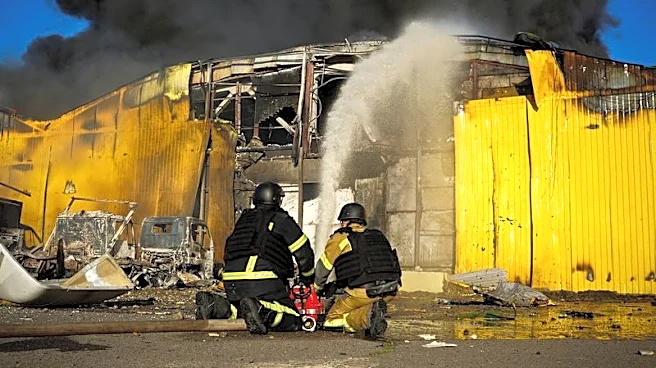
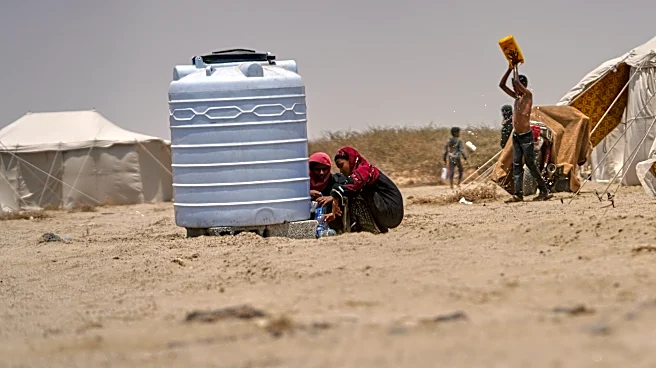
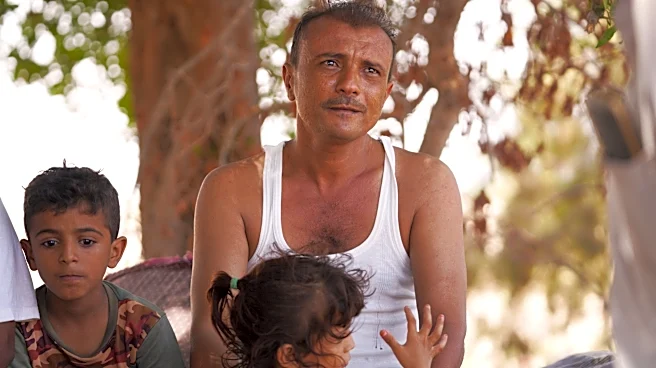
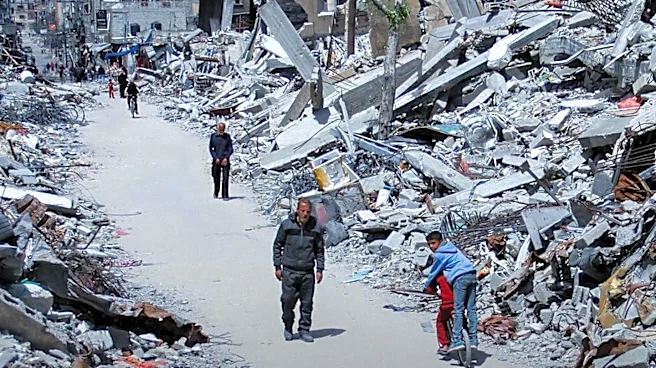
heavy rains and continued displacement, threatens to halt emergency relief supplies. Since April 2023, the conflict has reportedly killed over 200,000 people and created the world's largest hunger and displacement crisis. The IOM's network, comprising nearly 100 national and international NGOs, has provided aid to 2.8 million people since July 2023, but its reach is diminishing due to a significant reduction in global aid funding. Shelter and aid relief supplies are projected to be depleted by the end of the month without immediate donor support, and the operational capacity of warehouses can only be sustained until the end of the year. A total of 8.6 million people remain internally displaced in Sudan, with violence and floods continuously damaging shelters and forcing further movement.
Why It's Important?
The potential collapse of Sudan's aid network carries severe humanitarian implications, risking the lives of millions already affected by conflict and displacement. The IOM's Director General, Amy Pope, emphasized that the entire humanitarian system could cease functioning within weeks without new funding, leaving those most in need without assistance. The drastic cutback in global aid funding, with the World Food Programme (WFP) experiencing a roughly 50% drop in funding this year compared to last, highlights a broader challenge in international humanitarian response. This situation not only exacerbates the immediate suffering of the Sudanese population but also sets a dangerous precedent for other regions facing similar crises, where funding shortfalls could lead to widespread humanitarian failures. The inability to utilize existing aid infrastructure due to lack of funds, as noted by WFP Executive Director Carl Skau, underscores a critical disconnect between humanitarian capacity and financial support.
What's Next?
Without immediate and substantial donor support, the IOM anticipates that shelter and aid relief supplies will be exhausted by the end of the current month, and warehouse operations will cease by year-end. The IOM requires $15 million to sustain its system for a year to support 305,000 people and $42 million to restore aid levels to those provided in 2024. The World Food Programme also faces a critical funding gap, having received only $206 million this year compared to $645 million last year. The ongoing conflict, exemplified by recent RSF drone attacks on civilian infrastructure in Damazin, suggests that the need for humanitarian aid will continue to be urgent. The international community's response in the coming weeks will be crucial in determining whether the aid network can avert collapse and continue to provide life-saving assistance to the millions displaced and affected by the crisis in Sudan.
Beyond the Headlines
The crisis in Sudan extends beyond immediate humanitarian needs, revealing deeper systemic issues within global aid funding and conflict resolution. The significant reduction in aid funding, despite escalating needs, points to a potential shift in international priorities or donor fatigue, which could have long-term consequences for humanitarian efforts worldwide. The conflict's prolonged nature and its devastating impact on civilian populations, including the estimated 200,000 deaths and 8.6 million internally displaced, underscore the failure of political solutions to address the root causes of violence. Furthermore, the destruction of civilian infrastructure and the targeting of fuel stations, as reported, indicate a disregard for international humanitarian law, complicating aid delivery and prolonging suffering. The situation in Sudan serves as a stark reminder of the interconnectedness of conflict, climate impacts (heavy rains and floods), and humanitarian crises, demanding a more comprehensive and sustained international response.