







What's Happening?
Russian Interior Minister Vladimir Kolokoltsev arrived in Pakistan for a four-day visit aimed at enhancing bilateral relations and expanding cooperation. This marks the first visit to Pakistan by a Russian interior minister and is taking place at the invitation
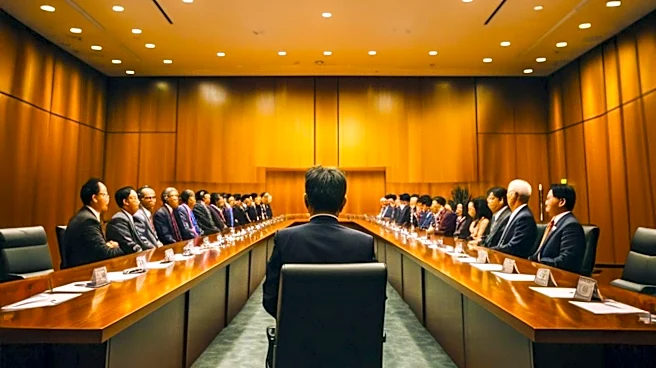
of Pakistan's Interior Minister Mohsin Naqvi. During his stay, Kolokoltsev is scheduled to engage in high-level discussions with Pakistan's leadership to strengthen cooperation in areas of mutual interest. The visit underscores growing engagement between Islamabad and Moscow, as both nations seek to broaden collaboration across political, economic, and energy sectors. Russian President Vladimir Putin previously described the relationship between the two countries as 'genuinely mutually beneficial,' emphasizing Moscow's close cooperation with Islamabad and highlighting Pakistan's membership in the Shanghai Cooperation Organisation (SCO) as a platform for regional economic and diplomatic engagement. Last July, Russian Deputy Prime Minister Alexei Overchuk also referred to Pakistan and Russia as 'natural allies,' noting President Putin's view of Islamabad as a significant strategic partner, particularly in economy and energy.
Why It's Important?
This visit is important as it signifies a deepening relationship between Russia and Pakistan, driven largely by economic considerations. Russia is actively seeking to diversify its energy export markets in response to Western sanctions imposed due to the Ukraine conflict. Concurrently, Pakistan is exploring alternative and more affordable energy sources to reduce its import costs. This convergence of interests has led to a significant boost in their energy partnership, notably with Pakistan beginning to import Russian crude oil in 2023. The visit by a high-ranking Russian official like the Interior Minister provides a crucial opportunity to further solidify these developments, strengthen institutional cooperation, and explore new avenues for bilateral engagement. For the U.S., this growing alignment between Russia and Pakistan could have implications for regional dynamics and influence, particularly in Central and South Asia, potentially challenging existing geopolitical balances and U.S. strategic interests in counter-terrorism and regional stability.
What's Next?
The visit is expected to lead to further discussions on strengthening institutional cooperation and exploring new avenues for bilateral engagement between Russia and Pakistan. Specific outcomes could include agreements on security cooperation, economic partnerships, and energy supplies. The ongoing high-level meetings between Minister Kolokoltsev and Pakistan's leadership will likely lay the groundwork for future collaborative projects. Both countries are keen to build on the momentum generated by recent energy deals, such as Pakistan's import of Russian crude oil. This visit could also influence regional security dialogues, especially within the framework of the Shanghai Cooperation Organisation (SCO), where both nations are members. The U.S. and its allies will likely monitor these developments closely for any shifts in regional power dynamics or potential impacts on international sanctions regimes against Russia.
Beyond the Headlines
The deepening ties between Russia and Pakistan, as highlighted by this visit, extend beyond immediate economic and security concerns to broader geopolitical shifts. This collaboration can be seen as part of a larger trend where non-Western powers are forging stronger alliances to counter perceived Western dominance and establish a more multipolar world order. For the U.S., this development could signal a gradual erosion of its influence in certain regions and necessitate a re-evaluation of its foreign policy strategies. The emphasis on organizations like the SCO suggests a move towards alternative frameworks for regional security and economic cooperation that do not center around U.S. leadership. This could lead to increased complexity in international relations, with new power blocs emerging and potentially challenging established norms and alliances, impacting global trade routes, energy markets, and security architectures.