
What's Happening?
Guam, a crucial U.S. territory in the Pacific, is facing significant logistical challenges that could impede its role as a military hub in the event of a conflict in the Indo-Pacific region. The Congressional
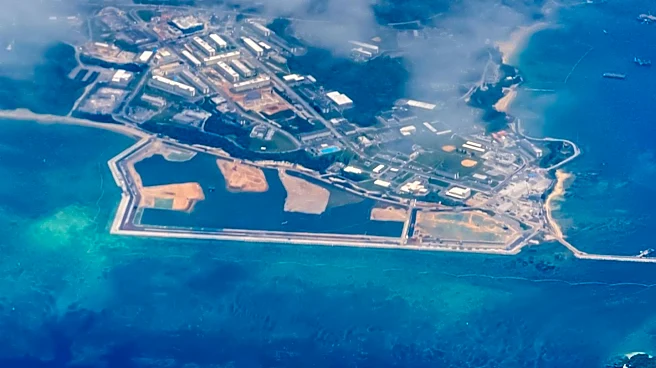
Research Service highlights Guam's strategic importance due to its proximity to Beijing, making it vital for U.S. air and naval operations. However, the island's current logistical infrastructure, particularly the Port of Guam, is inadequate to support large-scale military operations. The port handles 90% of the island's imports and serves over 500,000 residents, but its capacity is far below what would be required in wartime. Historical comparisons to the Gulf War and Operation Iraqi Freedom illustrate the scale of logistical movement needed, which Guam's port cannot currently support. The federal government plans to expand the port, but significant investment is required to meet military and commercial needs.
Why It's Important?
The logistical limitations of Guam pose a significant risk to U.S. military readiness in the Indo-Pacific, a region of growing strategic importance due to tensions with China. The inability to efficiently move military supplies and personnel could hinder U.S. operations and weaken its strategic position. Enhancing Guam's logistical capacity is crucial for maintaining U.S. influence and ensuring rapid deployment capabilities in the region. The situation underscores the need for substantial infrastructure investment to support both military and civilian operations, ensuring that Guam can serve as a reliable logistical hub in times of conflict.
What's Next?
The U.S. government plans to expand Guam's port facilities to accommodate larger vessels and increase storage capacity. This includes developing new piers and enhancing existing infrastructure to support military operations. However, these upgrades require significant financial investment and time. The Department of Defense is also considering the prepositioning of military stocks on Guam to improve readiness. The success of these initiatives will depend on securing funding and overcoming logistical challenges, such as the island's limited power and water infrastructure. The outcome will have long-term implications for U.S. military strategy in the Indo-Pacific.