


What's Happening?
The European Commission is moving forward with the Industrial Accelerator Act, which establishes 'Made in EU' preferences in green public procurement. This legislation, delayed for months, aims to bolster EU manufacturing in sectors such as batteries,
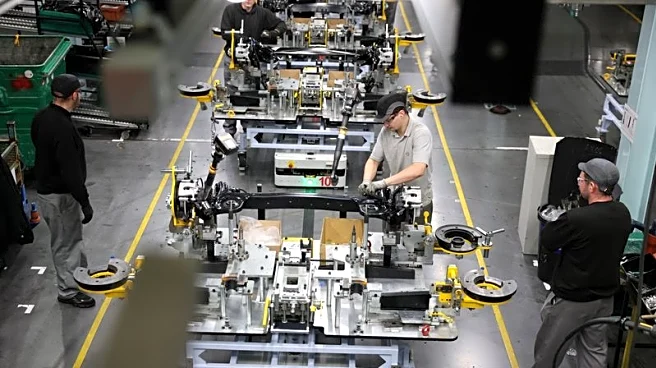
electric vehicles (EVs), and solar technology. A key provision requires that at least 70% of an EV's parts, excluding the battery, be sourced from within the EU to qualify for public subsidies. The act also mandates that steel used in public procurement be at least 25% low-carbon. However, the automotive industry, particularly German automakers, has expressed significant opposition. Concerns center around the definition of 'European' content and the potential exclusion of supply chains involving the UK and Turkey. The act's passage has been met with resistance from automakers like Renault, Stellantis, and Volkswagen, who worry about the implications for their operations and the broader industry.
Why It's Important?
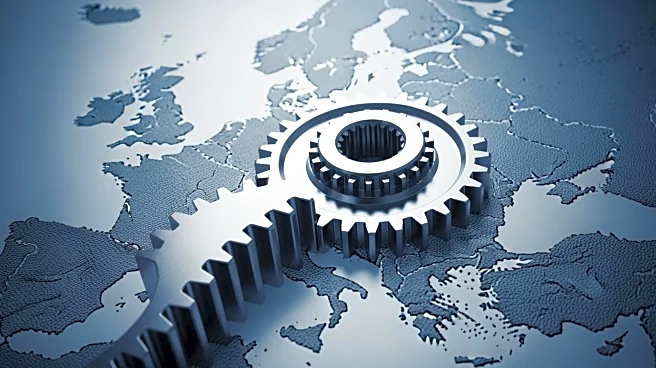
The 'Made in Europe' law is significant as it represents a major shift in EU industrial policy, aiming to reduce reliance on non-EU supply chains and promote local manufacturing. This move could have substantial economic implications, potentially reshaping the automotive and manufacturing sectors within Europe. For U.S. stakeholders, the law could influence trade dynamics, especially for companies with operations or partnerships in Europe. The automotive industry's resistance highlights the challenges of implementing such policies, as they could disrupt existing supply chains and increase production costs. Additionally, the law's focus on low-carbon steel and green technologies aligns with global efforts to combat climate change, potentially setting a precedent for similar policies in other regions.
What's Next?
The Industrial Accelerator Act will now undergo a review by the Council of the EU and the European Parliament, where further revisions are expected. The automotive industry and other stakeholders will likely continue to lobby for changes, particularly regarding the definition of 'European' content and the inclusion of countries like Turkey in the supply chain. The outcome of these discussions could have lasting impacts on the EU's industrial landscape and its trade relationships. As the legislation progresses, businesses will need to adapt to new regulatory requirements, potentially leading to shifts in manufacturing locations and strategies.
Beyond the Headlines
The 'Made in Europe' law raises broader questions about protectionism and its impact on global trade. The automotive industry's concerns about potential retaliation from countries like China underscore the delicate balance between promoting local industries and maintaining international trade relations. The law also highlights the EU's commitment to sustainability, as it seeks to align industrial policy with environmental goals. This approach could influence other regions to adopt similar measures, potentially leading to a more fragmented global market with distinct regional standards.