







What's Happening?
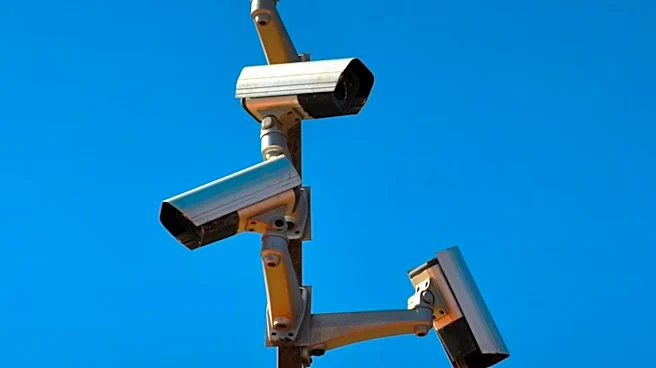
Takoma Park, Maryland, has activated new stop-sign cameras, initiating a 30-day warning period for drivers before fines commence on September 16. This program, authorized by Maryland Senate Bill 600 and approved by the Takoma Park City Council, aims to enhance
pedestrian safety, particularly in school zones, aligning with Maryland's Zero Deaths campaign and Montgomery County's Vision Zero initiative. A pilot study revealed thousands of daily violations, with some intersections showing violation rates as high as 87%. The city has installed 18 cameras across six wards, with specific locations including Ethan Allen Avenue, Carroll Avenue, Philadelphia Avenue, and Maple Avenue. During the program's first quarter, camera systems detected over 649,000 potential violations, leading to nearly 60,000 cases forwarded for review and approximately 57,400 approved citations.
Why It's Important?
The implementation of stop-sign cameras in Takoma Park signifies a growing trend in U.S. municipalities to leverage technology for traffic enforcement and public safety. This initiative is particularly important for pedestrian safety, addressing a critical concern in urban areas where high violation rates pose significant risks. The program's alignment with state and county safety campaigns underscores a broader commitment to reducing traffic-related fatalities and injuries. The initial warning period allows drivers to adjust their behavior, potentially fostering a culture of increased adherence to traffic laws. The data from the pilot study, indicating a 31% reduction in violations, suggests that such automated enforcement can be an effective tool in modifying driver conduct, ultimately making streets safer for residents and commuters. The financial implications for drivers, with citations not exceeding $40, also highlight the economic impact of non-compliance.
What's Next?
Following the 30-day warning period, drivers in Takoma Park will begin receiving fines for stop-sign violations detected by the new cameras, starting September 16. The city will continue to monitor the effectiveness of the program, likely using data from the cameras to assess further reductions in violations and improvements in pedestrian safety. There may be ongoing public discourse regarding the balance between automated enforcement and individual driver responsibility. The success of this program could influence other municipalities in Maryland and beyond to adopt similar technologies to address traffic safety concerns. Residents like David Bates, who expressed hope for increased driver attention, will be observing the long-term impact on local traffic patterns and pedestrian experiences.
Beyond the Headlines
The deployment of stop-sign cameras in Takoma Park raises broader questions about the role of surveillance technology in urban environments and its impact on civil liberties. While the primary goal is safety, the use of automated systems for enforcement can spark debates about privacy, potential for error, and equitable application of penalties. The high initial violation rates uncovered by the pilot study suggest a systemic issue with driver behavior that extends beyond individual negligence, possibly pointing to inadequate infrastructure or insufficient driver education. This program could serve as a case study for how technology can reshape urban governance and public safety, prompting discussions on the ethical considerations and societal implications of automated enforcement. It also highlights the ongoing challenge of balancing convenience with safety in increasingly dense urban settings.