






What's Happening?
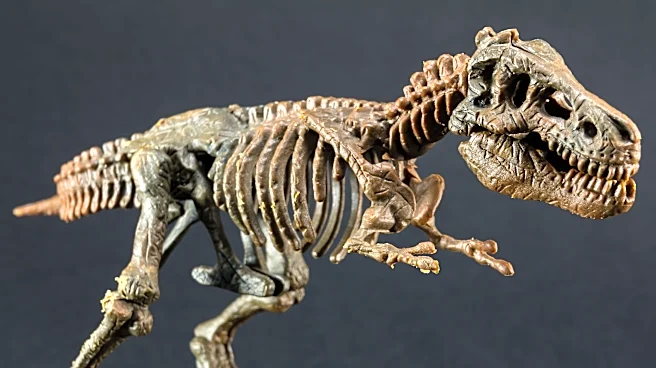
Paleontologists from University College London and the University of Cambridge have proposed a new explanation for the evolution of tiny arms in large predatory dinosaurs like Tyrannosaurus rex. Their research suggests that these dinosaurs developed small
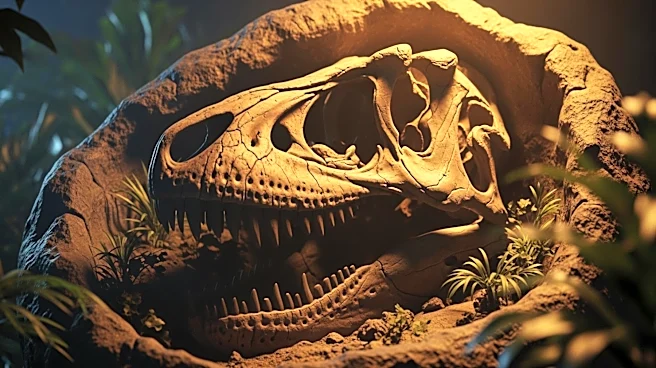
forelimbs in conjunction with massive heads and powerful jaws, indicating a shift in hunting strategies. The study analyzed data from 82 species of carnivorous theropod dinosaurs and found that the reduction in arm size was closely linked to the development of robust skulls and jaws, rather than an increase in overall body size. This adaptation is believed to have been driven by the need to hunt larger prey, such as gigantic sauropods, using their heads and jaws instead of their forelimbs.
Why It's Important?
This discovery provides significant insights into the evolutionary adaptations of theropod dinosaurs, particularly in understanding how they became apex predators. The findings highlight the role of natural selection in shaping physical traits that enhance survival and hunting efficiency. By focusing on the development of strong skulls and jaws, these dinosaurs could effectively hunt large prey, which may have contributed to their dominance during the Cretaceous period. This research not only sheds light on the evolutionary history of dinosaurs but also enhances our understanding of how species adapt to environmental challenges and opportunities.
What's Next?
The study opens avenues for further research into the evolutionary biology of theropods and other dinosaur groups. Future studies could explore the genetic and developmental mechanisms behind the reduction of forelimbs and the enhancement of skull and jaw strength. Additionally, paleontologists may investigate how these adaptations influenced the ecological dynamics of the Cretaceous period, including predator-prey relationships and competition among different dinosaur species.