
What's Happening?
The World Health Organization (WHO) has reported significant progress in malaria prevention, with new tools saving an estimated 1 million lives in 2024. However, this progress is under threat due to rising
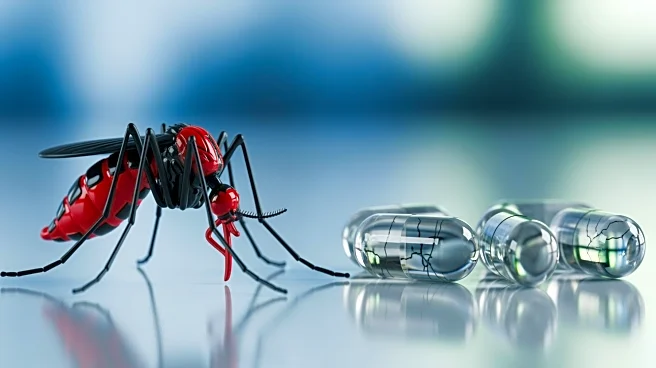
drug resistance. The WHO's annual World Malaria Report highlights the growing resistance to antimalarial drugs, particularly artemisinin derivatives, which are crucial for treatment. Resistance has been confirmed or suspected in several African countries, posing a challenge to malaria elimination efforts. Additionally, global funding for malaria interventions has plateaued, limiting the reach of life-saving measures.
Why It's Important?
The rise in drug resistance threatens to reverse the gains made in malaria control, potentially leading to increased cases and deaths. This situation underscores the need for continued investment in new treatments and prevention strategies. The plateauing of global funding further complicates efforts to combat malaria, highlighting the importance of sustained financial support and international collaboration. The impact is particularly severe in the African region, where most malaria deaths occur, emphasizing the need for targeted interventions and support.
What's Next?
WHO is urging malaria-endemic countries to maintain political commitments to ending malaria deaths and to invest in new medicines with novel mechanisms of action. The development of non-artemisinin combination therapies is seen as a promising step forward. Additionally, there is a call for increased global funding to meet the targets set by the Global Technical Strategy for Malaria. The focus will be on strengthening health systems, improving diagnostic tools, and enhancing surveillance to address the challenges posed by drug resistance.
Beyond the Headlines
Beyond the immediate health implications, the rise in drug resistance could have broader socio-economic impacts, particularly in regions heavily reliant on agriculture and tourism. Malaria outbreaks can disrupt economic activities and strain healthcare systems, affecting overall development. There is also a need to address environmental factors, such as climate change, which can alter mosquito habitats and transmission patterns, further complicating malaria control efforts.