




What's Happening?
Nebraska Governor Jim Pillen is under scrutiny following reports from The New York Times and Flatwater Free Press alleging that his family's pig-farming business, Pillen Family Farms, has employed at least 20 undocumented workers over the years. This
comes despite Governor Pillen's public advocacy for stringent immigration policies, including collaborating with Immigration and Customs Enforcement (ICE) and referring to undocumented immigrants as 'criminal illegal aliens.' A former employee, David Armendariz, stated that the company accepted fake IDs and did not question workers' true identities. The reports indicate that the use of undocumented labor was an 'open secret' within the company. Governor Pillen's spokesperson has denied any knowing employment of undocumented individuals, asserting that the governor 'went above and beyond the legal requirements to verify the immigration status of his employees' and has the 'strongest immigration record in Nebraska history.' The company reportedly began tightening its hiring requirements and utilizing special visas for Mexican immigrants when Pillen started his gubernatorial campaign in 2022.
Why It's Important?
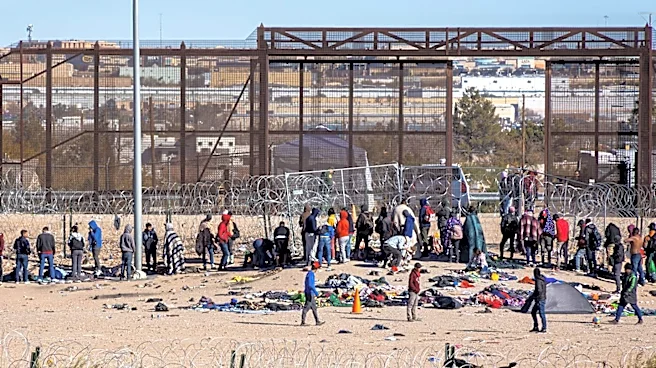
This situation highlights a significant disconnect between a public official's political rhetoric and the practices of their private business, raising questions about accountability and consistency in leadership. Governor Pillen's tough stance on immigration, which includes converting a state prison into an ICE holding facility and deploying National Guard soldiers to the U.S.-Mexico border, contrasts sharply with the alleged reliance on undocumented labor by his family enterprise. This discrepancy could erode public trust in political figures who advocate for strict policies while potentially benefiting from the very practices they condemn. For the agricultural sector, this case underscores the complex and often controversial relationship between labor needs, immigration laws, and business operations, particularly concerning the employment of migrant workers. It also brings to the forefront the broader issue of how businesses, especially in industries reliant on manual labor, navigate immigration regulations and the potential for exploitation of undocumented workers.
What's Next?
The revelations are likely to intensify political debate, particularly as Governor Pillen faces a re-election bid. His Democratic opponent, Lynne Walz, has already criticized the governor, stating that 'What he says and what he does are two different things.' Other gubernatorial candidates, including Brett Lindstrom and Rick Beard, have also weighed in, suggesting that the investigation reveals a pattern of the governor playing by 'his own set of rules.' The ongoing scrutiny could lead to further investigations into the hiring practices of Pillen Family Farms or similar businesses in Nebraska. The controversy may also influence voter perception in the upcoming general election on November 3, potentially impacting Governor Pillen's re-election prospects. Additionally, the discussion around immigration and labor practices in Nebraska's agricultural sector is expected to continue, possibly prompting calls for greater transparency and enforcement of labor laws.
Beyond the Headlines
The controversy surrounding Governor Pillen extends beyond immediate political implications, touching upon deeper ethical and societal issues. It highlights the systemic challenges within the U.S. immigration and labor systems, where businesses may knowingly or unknowingly employ undocumented workers due to various factors, including labor shortages and the pursuit of lower operating costs. This situation also brings into focus the concept of 'hypocrisy' in politics, where public figures' personal actions appear to contradict their stated public policies. The case could spark broader conversations about the responsibilities of business owners, particularly those in public office, to ensure ethical labor practices and adherence to immigration laws. Furthermore, it underscores the vulnerability of undocumented workers, who often face precarious employment conditions and may be hesitant to report abuses due to their immigration status, perpetuating a cycle of exploitation that benefits some businesses.