
What's Happening?
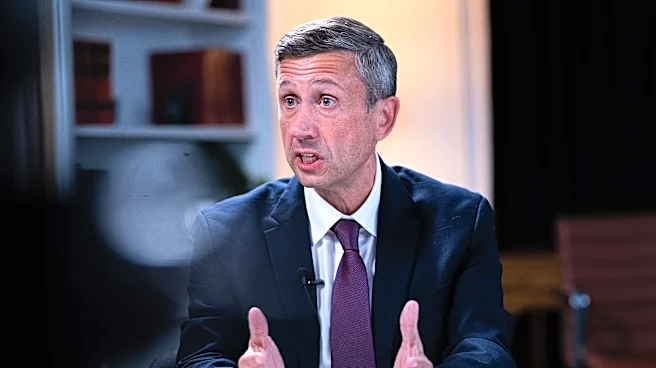
In the Michigan Senate race, Republican candidate Mike Rogers expressed confidence in his campaign's prospects against Democratic contender Abdul El-Sayed. During a private call with supporters, Rogers stated
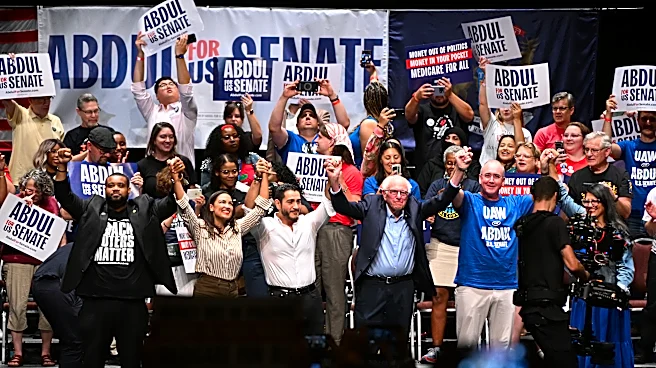
that his campaign is in 'pretty good shape' and would benefit if El-Sayed, known for his progressive stance, wins the Democratic primary. El-Sayed, supported by Senator Bernie Sanders, is seen as too radical by some, which Rogers believes could lead to a Republican advantage in the general election. The Democratic primary is a contest between El-Sayed and the more moderate Representative Haley Stevens. National Democrats view Michigan as crucial for maintaining a Senate majority, while Republicans see El-Sayed as a potentially weaker opponent in the general election.
Why It's Important?
The outcome of the Michigan Senate race could significantly impact the balance of power in the U.S. Senate. With the retirement of Senator Gary Peters, Democrats are keen to retain the seat to bolster their chances of securing a majority. Rogers' confidence in facing El-Sayed highlights the strategic calculations both parties are making. A victory for Rogers could strengthen Republican influence in the Senate, affecting legislative priorities and the Biden administration's agenda. Conversely, a win for El-Sayed or Stevens would help Democrats maintain their legislative momentum. The race also underscores the broader ideological battle within the Democratic Party between progressive and moderate factions.
What's Next?
The Democratic primary on August 4 will determine whether El-Sayed or Stevens will face Rogers in the general election. Both parties are likely to intensify their campaigns, with Democrats focusing on unity and voter turnout, while Republicans may continue to highlight El-Sayed's progressive policies as a liability. The general election will test the effectiveness of each party's strategy in a battleground state, with potential national implications for future elections.