





What's Happening?
A very strong El Niño event is currently underway, with NOAA's Climate Prediction Center indicating an over 83% chance of it persisting through March 2027 and exceeding the intensity of any El Niño since 1950. This climate pattern is expected to bring
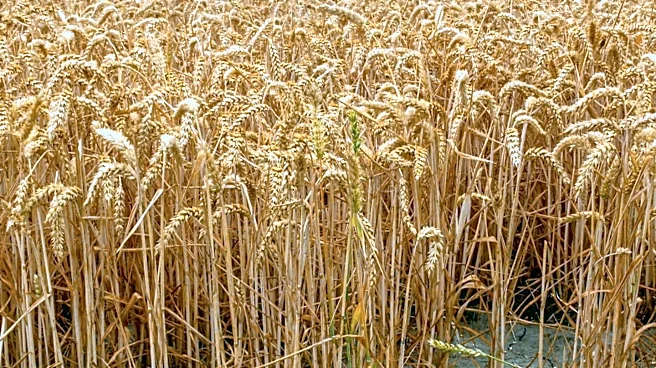
above-normal rainfall to the southern Plains and milder conditions to the north during the winter of 2026-2027. Historically, strong El Niño winters have led to varied impacts on U.S. crop yields in the subsequent year. Winter wheat in the Plains states, including South Dakota, Texas, Kansas, Oklahoma, Nebraska, and Colorado, has averaged significantly above normal yields (12-18% higher). Cotton in Texas has also seen an average increase of about 10%. Conversely, corn yields in the Southeast have tended to be lower, with Atlantic states experiencing 9-11% below-normal yields. Soybean impacts are mixed, with some Midwestern states seeing gains while others in the South experience slight declines. The El Niño pattern typically dissipates by the following summer, sometimes transitioning to La Niña, which has historically led to reduced corn and soybean yields.
Why It's Important?
The current strong El Niño has significant implications for U.S. agricultural production and the broader economy. Farmers in the southern Plains growing winter wheat and cotton may anticipate better-than-normal harvests, potentially leading to increased supply and affecting market prices for these commodities. This could influence decisions regarding fertilizer application, fungicide plans, and storage capacity. Conversely, corn and soybean growers, particularly in the Southeast, might face challenges due to potentially lower yields, which could impact their profitability and regional agricultural output. The shift from El Niño to La Niña in the summer following a strong El Niño is a critical factor, as past La Niña summers have negatively affected corn and soybean yields across the U.S. This variability creates uncertainty for agricultural planning, insurance decisions, and input management, highlighting the need for farmers to monitor climate forecasts closely.
What's Next?
Southern Plains wheat and cotton growers are advised to plan for potentially better-than-normal crops, considering increased top-dress nitrogen, fungicide applications, and enhanced harvest and storage capacity. For corn and soybean growers, the immediate impact of the El Niño winter is less clear, and there is little reason to alter plans before spring. However, they should closely monitor the climate outlook for the summer of 2027, as the potential transition to La Niña could negatively affect their yields. The USDA will maintain trend yields until August surveys, regardless of winter conditions, meaning official yield forecasts will not immediately reflect the El Niño's influence. Stakeholders in the agricultural sector will need to adapt their strategies based on evolving weather patterns and official agricultural reports to mitigate risks and capitalize on potential opportunities.
Beyond the Headlines
The increasing intensity of El Niño events, potentially linked to climate change, suggests a future with more volatile agricultural conditions. This could lead to greater regional disparities in crop success, with some areas consistently benefiting while others face recurring challenges. Such shifts might prompt long-term changes in crop selection, farming practices, and agricultural infrastructure investments across different U.S. regions. The reliance on climate patterns like El Niño and La Niña underscores the vulnerability of the agricultural sector to natural climate variability, which may be exacerbated by global warming. This situation also highlights the importance of climate resilience strategies, including diversified farming, improved water management, and advanced weather forecasting, to ensure food security and economic stability in the face of increasingly extreme weather events.