






What's Happening?
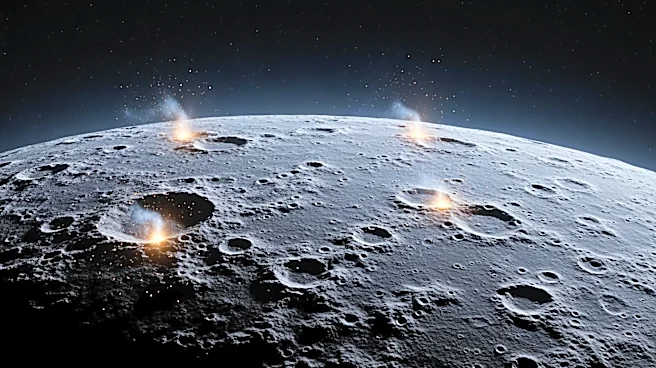
During a historic lunar flyby, astronauts aboard NASA's Artemis II mission observed meteorite impacts on the moon's surface. This unexpected sighting occurred as the crew, led by mission commander Reid Wiseman, witnessed flashes of light caused by meteorite strikes.
The observations were made during a seven-hour observation period, with the crew reporting a total of six impacts. These findings have intrigued scientists, as such phenomena are rarely witnessed. The mission's lunar science lead, Kelsey Young, expressed surprise and excitement over the observations, which were made during a solar eclipse when the moon passed in front of the sun.
Why It's Important?
The observations made by the Artemis II crew provide valuable data for understanding the frequency and impact of meteorites on the moon. This information is crucial for future lunar exploration and the potential establishment of a lunar base, as it highlights the need to monitor meteorite activity closely. The data could help scientists estimate the size of meteorites that cause visible impacts, contributing to safety measures for future missions. Additionally, these findings underscore the importance of continued lunar exploration and the potential scientific discoveries that such missions can yield.
What's Next?
NASA's ground teams are working to correlate the crew's observations with satellite data to better understand the meteorite impacts. This analysis will help refine models of meteorite activity on the moon, informing future missions and the design of lunar habitats. The Artemis program aims to establish a sustainable human presence on the moon, and understanding meteorite impacts is a critical component of ensuring the safety and success of these endeavors. The data collected may also influence the planning and timing of future lunar missions, as well as the development of protective measures for lunar infrastructure.