
What's Happening?
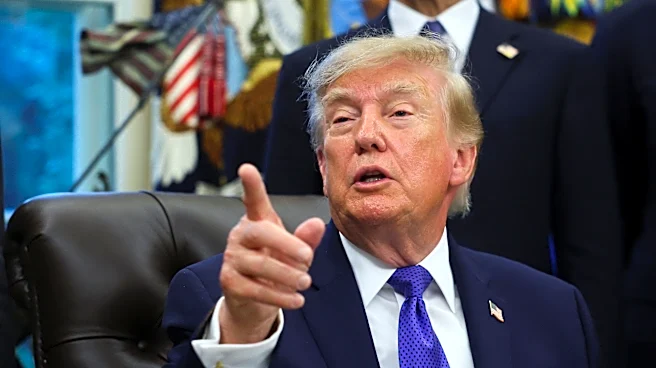
President Trump's approval rating has fallen to a dismal 32% in a recent Reuters/Ipsos poll, indicating a significant decline in public support, even among his base. This comes as the President has been criticized for using taxpayer money on public service
announcements and launching 'Trump TV,' which has seen low viewership. President Trump has also continued to make unfulfilled promises of financial relief, including a $5,000 'dividend' check to every adult American if Republicans win the November midterms. This is part of a pattern of similar unfulfilled promises, such as $5,000 stimulus checks via a 'DOGE dividend' in February 2025, various $2,000 stimulus checks throughout 2025 and 2026, and $500 Obamacare 'rebate' checks in September 2026. Public skepticism is growing, with only 13% of Americans believing the $5,000 check promise.
Why It's Important?
The declining approval ratings for President Trump, coupled with widespread disbelief in his financial promises, signal a potential shift in the political landscape. This erosion of trust, even among some of his core supporters, could have significant implications for the upcoming midterm elections and future political dynamics. The use of taxpayer funds for what are perceived as self-serving propaganda efforts, rather than substantive policy, raises questions about government accountability and the allocation of public resources. The repeated unfulfilled promises of direct financial payments highlight a disconnect between political rhetoric and economic reality, potentially fostering cynicism among the electorate. This situation could lead to increased voter disengagement or a backlash against the incumbent party, as citizens become more discerning about political pledges, especially those related to their personal finances.
What's Next?
As the midterm elections approach, President Trump's administration may continue to face challenges in regaining public trust and improving approval ratings. The focus will likely shift to how these declining numbers impact Republican candidates in competitive congressional races, particularly as President Trump is reportedly avoiding visits to states with close contests. The administration may attempt to pivot its messaging or introduce new initiatives to address public concerns, though the effectiveness of such efforts remains to be seen given the current level of skepticism. The ongoing discussions about various rebate proposals, while currently unapproved, could resurface as political talking points. The public will likely continue to scrutinize any new financial promises, demanding concrete legislative action rather than mere assurances.
Beyond the Headlines
The current situation reflects a deeper challenge in political communication and the efficacy of populist appeals. The repeated promises of direct financial benefits, even when unfulfilled, can create a cycle of hope and disappointment that erodes public trust in political institutions. This phenomenon also underscores the evolving nature of political campaigning, where direct appeals to personal economic gain are frequently used. The public's growing skepticism, as evidenced by the low belief in the $5,000 check promise, suggests a maturation in how voters evaluate political claims, moving beyond rhetoric to demand tangible results. This could lead to a more critical electorate in future elections, forcing political figures to adopt more transparent and realistic policy proposals. The use of taxpayer money for what are perceived as propaganda efforts also raises ethical questions about the boundaries between public service and political self-promotion.