
What's Happening?
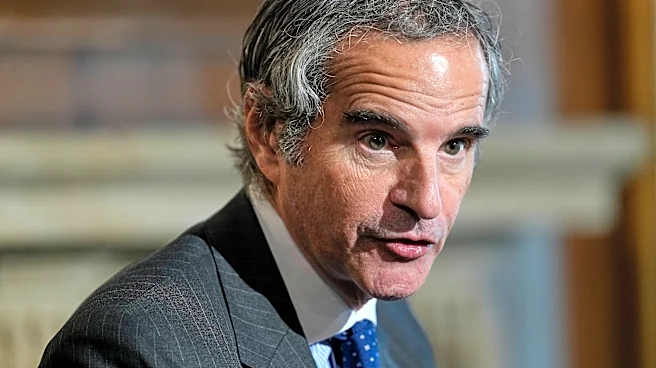
The International Atomic Energy Agency (IAEA) is actively discussing the extraction of Iran's enriched uranium with Russia and the United States. According to IAEA chief Rafael Grossi, the majority of Iran's enriched uranium is believed
to be stored at the Isfahan nuclear complex, which has been targeted by airstrikes from the US and Israel. Satellite imagery has shown containers suspected to hold highly enriched uranium entering the facility, but the IAEA has not been able to inspect the site due to ongoing conflicts. Grossi emphasized that the IAEA's assessments are based on satellite data and are not definitive, as Iran has not allowed inspections despite obligations under the Nuclear Non-Proliferation Treaty. The IAEA is also in informal discussions with Iran, although it is not part of the ceasefire negotiations currently taking place in Pakistan.
Why It's Important?
The discussions around Iran's enriched uranium are crucial due to the potential implications for regional and global security. The presence of enriched uranium at the Isfahan site raises concerns about nuclear proliferation and the possibility of Iran advancing its nuclear capabilities. The involvement of Russia and the US in these talks highlights the geopolitical significance of the issue, as both countries have vested interests in preventing nuclear escalation in the Middle East. The inability of the IAEA to conduct inspections further complicates the situation, as it limits transparency and verification of Iran's nuclear activities. The ongoing dialogue between these international actors could influence future diplomatic and military strategies in the region.
What's Next?
The IAEA plans to conduct an inspection at a new uranium enrichment facility in Isfahan, which Iran declared last June. However, the timing of this inspection is uncertain due to recent airstrikes. The agency's discussions with Russia and the US may lead to potential agreements on the extraction and handling of Iran's enriched uranium. Additionally, President Trump has indicated that Russian President Putin offered assistance in managing the uranium, though Trump suggested Putin focus on resolving the conflict in Ukraine. The outcome of these discussions could impact future negotiations and the stability of the region.
Beyond the Headlines
The situation with Iran's enriched uranium has broader implications for international nuclear policy and the role of the IAEA in enforcing compliance with non-proliferation agreements. The challenges faced by the IAEA in accessing and inspecting nuclear sites underscore the difficulties in maintaining global nuclear security. The geopolitical dynamics involving Russia, the US, and Iran also reflect the complex interplay of power and influence in international relations, where nuclear capabilities are a critical factor. The resolution of this issue could set precedents for how similar situations are handled in the future.