








What's Happening?
A large-scale study involving over 460,000 Americans has challenged the generalized assumption that all ultra-processed food (UPF) consumption is linked to a higher incidence of colorectal cancer (CRC). The research, led by Erikka Loftfield of the National
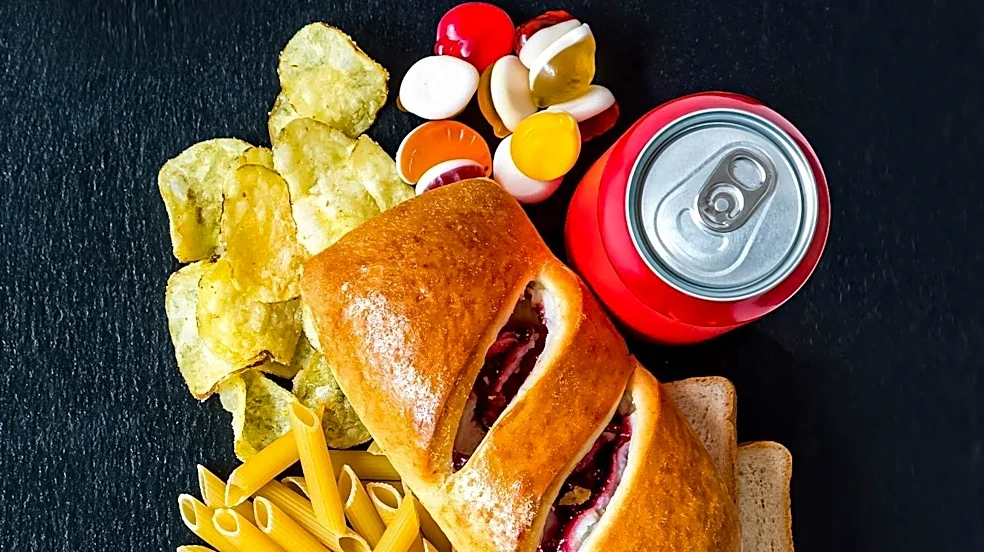
Cancer Institute and published in PLOS Medicine, found no overall association between total UPF intake and CRC rates. However, the study revealed a more complex relationship when examining specific categories of ultra-processed foods. For instance, higher consumption of whole grains, fiber, dairy products, and calcium from ultra-processed sources was associated with a lower incidence of colorectal cancer. Conversely, processed meats from ultra-processed sources showed a correlation with higher cancer incidence. This suggests that the health effects of ultra-processed foods are heavily dependent on their specific nutritional content rather than merely their processing level. The study tracked participants from the NIH-AARP Diet and Health Study, aged 50 to 71, for nearly 19 years, analyzing their dietary records and subsequent cancer development.
Why It's Important?
This study is important because it refines the understanding of ultra-processed foods' impact on health, particularly concerning colorectal cancer. Previous discussions often broadly condemned all ultra-processed foods, leading to consumer confusion and potentially misdirected dietary advice. By differentiating between types of UPFs, the research provides a more nuanced perspective, indicating that some ultra-processed foods can contribute to a lower cancer risk due to their beneficial components like whole grains and dairy. This could influence public health messaging and dietary guidelines, shifting the focus from simply avoiding all UPFs to emphasizing the nutritional composition within these categories. For the food industry, these findings suggest a need to innovate and reformulate products to include more beneficial ingredients, even within the ultra-processed category, to align with health-conscious consumer demands and evolving scientific understanding. It also highlights the limitations of broad food classifications and the importance of considering individual food components.
What's Next?
The findings suggest a need for further research to clarify the specific mechanisms through which different ultra-processed food components affect colorectal cancer risk. Future studies may focus on more diverse populations, as the current study primarily involved older, white Americans, and account for dietary changes over time. Policymakers and health organizations may need to re-evaluate and refine their dietary recommendations regarding ultra-processed foods, moving towards more specific guidance that considers the nutritional content rather than just the processing level. The food industry is likely to continue its efforts in product reformulation, focusing on increasing beneficial ingredients and reducing those linked to higher health risks, especially in response to potential shifts in consumer perception and regulatory discussions. This could lead to new product developments that are classified as ultra-processed but are marketed for their positive nutritional attributes.
Beyond the Headlines
Beyond the immediate health implications, this study touches upon the broader challenge of food classification and public perception. The term 'ultra-processed food' has become a significant point of contention, often leading to an oversimplified view of dietary health. This research underscores that not all foods within a broad category are created equal, prompting a deeper look into the specific ingredients and their biological effects. It highlights the ethical responsibility of both researchers and media to communicate scientific findings with precision, avoiding generalizations that can lead to unnecessary fear or confusion among consumers. The study also implicitly calls for a more sophisticated approach to food labeling and education, where consumers are empowered with detailed nutritional information rather than relying solely on broad processing categories. This could foster a more informed public discourse around diet and health, moving beyond simplistic 'good' or 'bad' food labels.