





What's Happening?
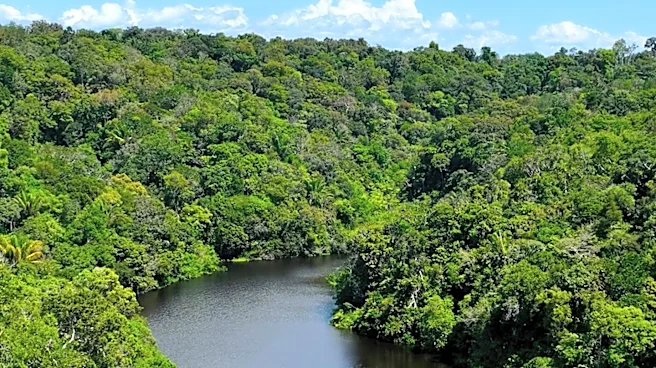
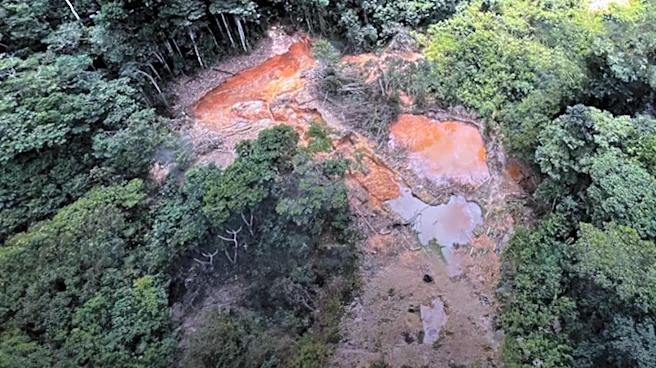
Deforestation in the Brazilian Amazon has fallen to its lowest recorded level, with 3,335 square kilometers cleared in the 12 months ending July 31, 2026. This figure represents a 42% reduction from the previous year. The adjacent Cerrado savanna also
saw a record low in deforestation, decreasing by 24% to 5,516 square kilometers. This significant reduction has occurred since President Luiz Inácio Lula da Silva took office in 2023, who reinstated environmental law enforcement, expanded conservation programs, and worked to establish protected areas and recognize Indigenous territories. However, the Amazon faces a near-term challenge from a super El Niño event, which is typically associated with drought in the southern Amazon and an increase in fires the year after a strong event. Brazil accounts for over 60% of the Amazon rainforest.
Why It's Important?
The drastic reduction in Amazon deforestation is crucial for global climate stability and biodiversity. The Amazon rainforest plays a vital role in regulating global weather patterns and is home to an immense variety of species. Continued deforestation could lead to a tipping point where the evapotranspiration system that drives rainfall across the region fails, resulting in drier conditions, increased fires, and species die-offs. Such a disruption could also reduce rainfall in southern South America, impacting the continent's agricultural heartland. The current progress highlights the effectiveness of strong environmental policies and enforcement, demonstrating how political leadership can directly influence ecological outcomes on a large scale. The potential reversal of these gains due to political shifts or climate events like El Niño underscores the fragility of these environmental achievements.
What's Next?
The future of Amazon protection is uncertain, particularly with President Lula facing a tough re-election bid. Seven of the nine governors in Amazon states are allied with Flávio Bolsonaro, a frontrunner who has campaigned on reducing protections for the Amazon. A change in political leadership could reverse the recent progress in reducing forest loss. Additionally, the brewing super El Niño in the Pacific poses an immediate threat. El Niño events are known to cause droughts in the southern Amazon, which could lead to an increase in forest fires in the coming year, potentially undermining the gains made in reducing deforestation. Continued monitoring of both political developments and climate patterns will be essential to assess the long-term outlook for the Amazon.
Beyond the Headlines
The connection between political will and environmental outcomes is starkly illustrated by the Amazon's recent deforestation trends. The rapid decline in forest clearing under President Lula's administration demonstrates that policy and enforcement are powerful tools in conservation. However, the political landscape remains volatile, with the upcoming election potentially shifting the balance of power towards leaders less committed to environmental protection. This situation highlights the ongoing tension between economic development and ecological preservation, particularly in resource-rich regions. The long-term health of the Amazon, and by extension global climate, depends not only on immediate conservation efforts but also on sustained political commitment and international support to counter both human-induced pressures and natural climate phenomena.