







What's Happening?
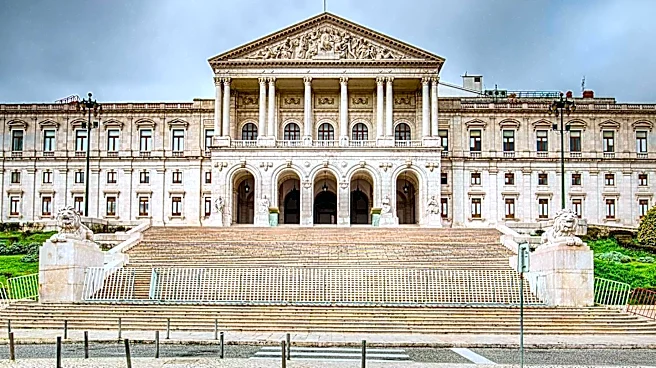
José Pedro Aguiar-Branco, the President of the Portuguese Assembly of the Republic, reiterated Portugal's solidarity with Mozambique concerning the terrorist threat in Cabo Delgado during his visit to Maputo. Speaking before the Mozambican Assembly of the Republic, Aguiar-Branco emphasized
the importance of stronger political dialogue and parliamentary cooperation to consolidate democracy and promote peace. He condemned extremism and terrorism in Cabo Delgado and assured that the Portuguese parliament would continue to draw international attention to the situation to help restore peace. On bilateral relations, Aguiar-Branco highlighted the historical, cultural, linguistic, and human ties between the two nations, noting that approximately 500 Portuguese companies operate in Mozambique, contributing to job creation and professional training. A new protocol for parliamentary cooperation was announced, aiming to facilitate exchanges between legislators and parliamentary services, share experiences on working committees, utilize artificial intelligence, and develop mechanisms to bring institutions closer to citizens.
Why It's Important?
Portugal's reaffirmation of solidarity and commitment to enhanced parliamentary cooperation with Mozambique is significant for several reasons. Firstly, it provides crucial diplomatic and moral support to Mozambique as it grapples with the escalating insurgency in Cabo Delgado, potentially encouraging other international partners to offer assistance. The focus on strengthening political dialogue and parliamentary cooperation can help reinforce democratic institutions in Mozambique, which are vital for long-term stability and effective governance in the face of internal threats. Economically, the presence of 500 Portuguese companies underscores the deep economic ties and Portugal's role in Mozambique's development, making stability in Cabo Delgado a shared interest. The new cooperation protocol, particularly its emphasis on artificial intelligence and institutional development, could help modernize Mozambique's parliamentary processes and improve its capacity to address complex national challenges. This bilateral support can also serve as a model for how former colonial powers can engage constructively with their former colonies on contemporary issues.
What's Next?
The announced parliamentary cooperation protocol is expected to be implemented, leading to increased exchanges between Portuguese and Mozambican legislators and parliamentary services. This will likely involve sharing best practices in legislative functions, committee work, and the integration of new technologies like artificial intelligence into governance. Portugal's commitment to raising international awareness about Cabo Delgado suggests continued diplomatic efforts to mobilize global support and resources for Mozambique's security and humanitarian needs. The ongoing presence and operations of Portuguese companies in Mozambique will likely continue, with their stability being closely tied to the security situation in Cabo Delgado. The collaboration is also expected to extend to international parliamentary forums, particularly the Parliamentary Assembly of the Community of Portuguese-Speaking Countries (CPLP), where Portugal will assume the presidency in 2027, building on Mozambique's prior work. This sustained engagement aims to foster greater regional and international cooperation in addressing the insurgency and promoting peace.
Beyond the Headlines
Beyond the immediate diplomatic and security implications, Portugal's engagement with Mozambique reflects a broader trend of former colonial powers maintaining strategic relationships with their former territories, often driven by shared language, culture, and economic interests. This relationship can be a double-edged sword, offering vital support but also potentially raising questions about historical legacies and power dynamics. The emphasis on parliamentary cooperation and democratic consolidation highlights the belief that strong institutions are essential for countering extremism and ensuring national resilience. The integration of artificial intelligence into parliamentary processes, as envisioned by the new protocol, points to a forward-looking approach to governance, aiming to leverage technology for improved efficiency and citizen engagement. However, the success of these initiatives will depend on their practical implementation and their ability to genuinely address the underlying socio-economic and political grievances that fuel the insurgency in Cabo Delgado. The cultural and linguistic ties, while strong, must be translated into tangible benefits for the Mozambican populace to ensure the long-term efficacy of this solidarity.