








What's Happening?
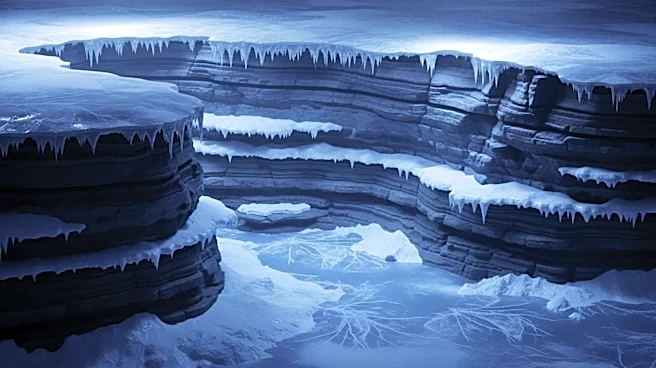
Researchers have discovered a massive, fan-shaped geological structure beneath East Antarctica, consisting of about 30 connected basins. This structure, named the East Antarctic Fan-Shaped Basin Province, is believed to have formed before the breakup
of the Gondwana supercontinent. The discovery was made using a combination of radar, gravity, seismic, and magnetic data. The structure's influence on ice flow and landscape evolution is significant, as it underlies a large portion of the East Antarctic Ice Sheet. Understanding this hidden landscape is crucial for predicting the movement of ice and the impact of climate change on Antarctica.
Why It's Important?
The discovery of this geological structure provides valuable insights into Antarctica's geological history and its role in global climate systems. By understanding the underlying topography, scientists can better predict ice flow patterns, which are critical for assessing future sea-level rise. This research also contributes to the broader understanding of Earth's tectonic history, particularly the processes that led to the separation of Antarctica from other landmasses. The findings could have implications for climate models and strategies to mitigate the effects of climate change.
What's Next?
Future research will focus on refining the understanding of the structure's formation and its impact on Antarctica's current and future landscape. Scientists aim to explore the potential tectonic activity that preceded the breakup of Gondwana and how it may have influenced Antarctica's geological features. Continued investigation will also seek to improve predictions of ice movement and contribute to global efforts to address climate change.