


What's Happening?
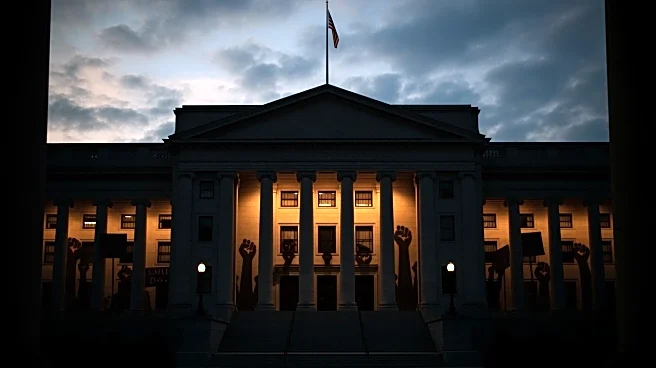
Bulgarian Prime Minister Rosen Zhelyazkov and his government have resigned following mass protests across the country. The protests, which saw tens of thousands of people gather in Sofia's central square, were driven by accusations of widespread corruption
within the minority center-right government. The resignation was announced just before a scheduled vote of no confidence in parliament. The protests were further fueled by the government's controversial budget plans, which included higher taxes and increased social security contributions. These plans were withdrawn last week in response to public outcry. The resignation comes just weeks before Bulgaria is set to join the eurozone, switching from its national currency, the lev, to the euro.
Why It's Important?
The resignation of Bulgaria's government highlights the significant impact of public protest on political stability. The mass demonstrations reflect deep-seated dissatisfaction with corruption and economic management, issues that resonate beyond Bulgaria. The timing of the resignation is critical, as Bulgaria is on the cusp of joining the eurozone, a move that could have significant economic implications for the country. The protests and subsequent government resignation underscore the power of civic engagement in holding governments accountable and could inspire similar movements in other nations facing corruption and economic challenges.
What's Next?
With the government stepping down, Bulgaria faces a period of political uncertainty. The next steps involve the formation of a new government, which will need to address the concerns raised by the protesters. The transition to the eurozone adds another layer of complexity, as the new administration will need to manage this significant economic shift. The international community, particularly the European Union, will be closely monitoring Bulgaria's political developments, given the potential implications for regional stability and economic integration.