



What's Happening?
India has introduced a significant change in its solar incentive policies, emphasizing the integration of battery storage with solar projects. The Pradhan Mantri Surya Ghar (PM-SSY) scheme now requires all new large solar projects to include a two-hour
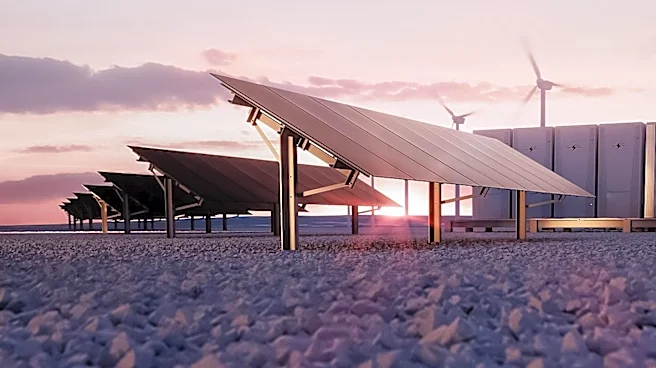
energy storage system equivalent to 10% of the project capacity. This mandate is particularly focused on floating solar projects. The initiative aims to address the limited grid-scale battery storage, which is crucial for the operational success of solar projects. The Ministry of New and Renewable Energy anticipates that this scheme will drive approximately ₹28,500 crore in investment for floating solar and co-located storage infrastructure over the coming years.
Why It's Important?
The shift in policy underscores the growing importance of energy storage in renewable energy projects. By mandating battery storage, India aims to enhance the reliability and efficiency of solar power, addressing the 'duck curve' problem where solar generation peaks during midday but demand peaks in the evening. This policy could significantly reduce the curtailment of renewable energy and improve grid stability. The investment in battery storage is expected to catalyze economic growth, create jobs, and reduce carbon emissions, aligning with India's broader renewable energy goals and its commitment to increasing non-fossil electricity capacity.
What's Next?
The PM-SSY scheme will be implemented progressively from fiscal year 2026-27 through 2030-31, with financial disbursements continuing through 2032-33. Developers will need to secure bankable co-located battery supply before projects can proceed, which may pose a challenge given the current state of India's battery manufacturing capacity. The scheme also includes a domestic manufacturing mandate, promoting Indian-made components, which could further stimulate local industry. The success of this initiative will depend on overcoming supply chain constraints and ensuring environmental and stakeholder considerations are addressed.
Beyond the Headlines
The integration of battery storage with solar projects could set a precedent for other countries facing similar grid challenges. The policy highlights the need for innovative solutions to balance renewable energy supply and demand. Additionally, the focus on floating solar projects leverages India's vast water bodies, offering a sustainable alternative to land-based solar installations. However, the ecological impact of large-scale floating solar projects on aquatic ecosystems will need careful management to avoid adverse effects.