

What's Happening?
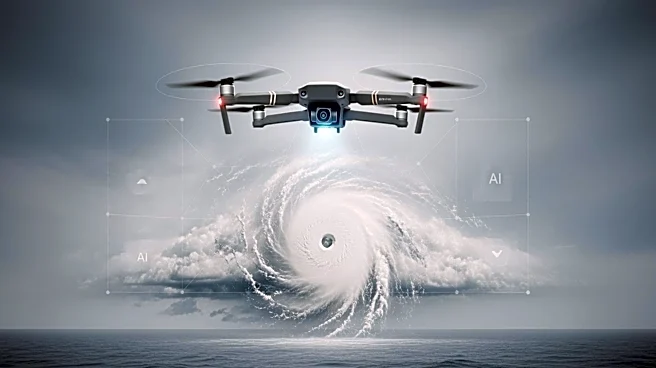
Cellphone carriers like Verizon, AT&T, and T-Mobile are enhancing their hurricane response strategies using artificial intelligence (AI), drones, and mobile units to maintain communication during storms. Verizon employs drones to assess damage and uses
AI to direct repair efforts, while AT&T's disaster response fleet includes boats and helicopters to reach affected areas. T-Mobile prepares months in advance, offering free satellite service during outages. These companies prioritize network access for first responders, ensuring they can perform critical tasks like telemedicine and emergency communication. The carriers' efforts aim to reduce service restoration times and improve network resilience during hurricanes.
Why It's Important?
Maintaining communication during hurricanes is vital for public safety and emergency response. The use of AI and drones allows carriers to quickly assess and repair network damage, minimizing downtime for customers. Prioritizing first responders ensures that essential services remain operational, supporting law enforcement, firefighters, and medical personnel in their duties. The carriers' investments in network resilience and preparedness reflect a commitment to public safety and highlight the importance of technological innovation in disaster response. These efforts help communities stay connected and informed, reducing the potential for chaos and enhancing overall disaster management.
What's Next?
As hurricane season continues, cellphone carriers will monitor weather developments and adjust their response plans accordingly. They will continue to collaborate with local emergency management teams to ensure effective communication and resource allocation. The integration of new technologies like AI and drones will likely expand, further improving the speed and efficiency of network restoration efforts. Carriers may also explore additional innovations to enhance network resilience, such as expanding 5G coverage and building new cell towers in underserved areas. These ongoing efforts will be crucial in maintaining reliable communication during future disasters.