







What's Happening?
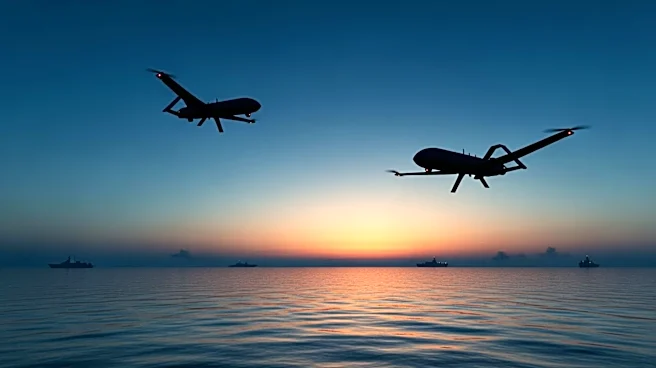
The U.S. military has conducted strikes on Iranian coastal radar sites after intercepting drones launched by Iran towards the Strait of Hormuz. This action is part of an ongoing conflict between the U.S. and Iran, which has seen a series of military engagements
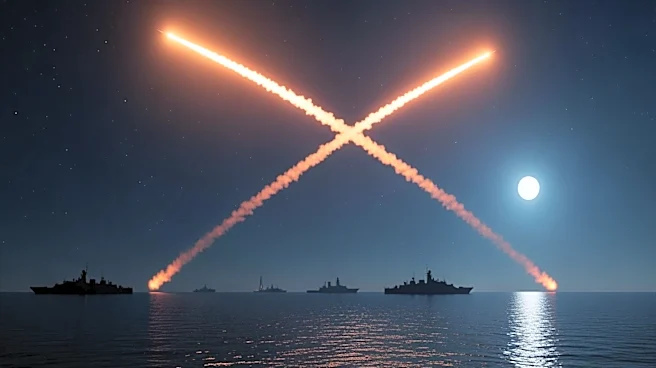
in the Gulf region. The U.S. Central Command reported that four Iranian drones were shot down, and retaliatory strikes were carried out on Iranian surveillance sites in Goruk and Qeshm Island. Iran's Revolutionary Guard responded by targeting U.S. bases in Kuwait and Bahrain with ballistic missiles, although the U.S. military intercepted six of these missiles, with the seventh failing to reach its target. The conflict has been ongoing for three months, with both sides engaging in indirect negotiations to reach an interim peace deal.
Why It's Important?
The escalation of military actions between the U.S. and Iran in the Gulf region underscores the fragile state of international relations and the potential for broader conflict. The Strait of Hormuz is a critical maritime passage for global oil shipments, and disruptions here could have significant implications for global energy markets. The U.S. response to Iranian aggression highlights the strategic importance of maintaining security in this region. Additionally, the potential redirection of Iranian assets by the U.S. to compensate Gulf allies for damages could further strain diplomatic efforts and complicate peace negotiations. The ongoing conflict poses risks to regional stability and could impact global economic conditions if tensions continue to rise.
What's Next?
The situation remains tense, with both the U.S. and Iran likely to continue military posturing while engaging in diplomatic efforts to reach a ceasefire. The U.S. Treasury's consideration of redirecting Iranian assets for Gulf reconstruction could become a contentious issue in negotiations. Meanwhile, regional allies such as Kuwait and Bahrain are on high alert, with their air defenses actively intercepting threats. The international community, including mediating countries like Pakistan, may increase diplomatic efforts to de-escalate the situation and facilitate a peace agreement. However, the path to a lasting resolution remains uncertain amid ongoing military actions.