
What's Happening?
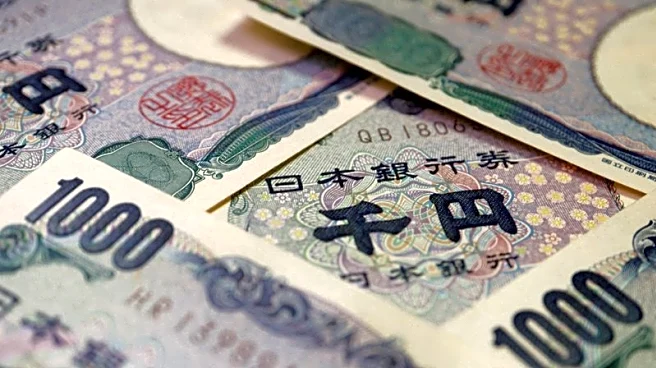
The Japanese yen has strengthened following the release of the Bank of Japan's (BOJ) December meeting minutes, which indicated a potential for further interest rate hikes. The BOJ recently raised its policy
rate to 0.75%, the highest in 30 years, as part of efforts to address economic challenges. Despite the rate hike, the yen has been weaker than expected, prompting discussions on possible market interventions. Finance Minister Satsuki Katayama emphasized Japan's readiness to address excessive currency movements, although current conditions do not warrant intervention.
Why It's Important?
The yen's performance and the BOJ's monetary policy decisions have significant implications for global financial markets. Japan's interest rate adjustments influence currency exchange rates, impacting international trade and investment flows. A stronger yen could affect Japan's export competitiveness, while further rate hikes may influence global interest rate trends. The BOJ's actions are closely watched by investors and policymakers worldwide, as they navigate the complexities of balancing economic growth with currency stability.
What's Next?
Market participants will continue to monitor the BOJ's policy signals and potential interventions in the currency market. The yen's trajectory will depend on Japan's economic performance and global financial conditions. The release of the Federal Open Market Committee's meeting minutes will also provide insights into U.S. monetary policy, influencing currency markets. As Japan navigates its economic challenges, the BOJ's decisions will play a crucial role in shaping the country's financial landscape and its interactions with global markets.