
What's Happening?
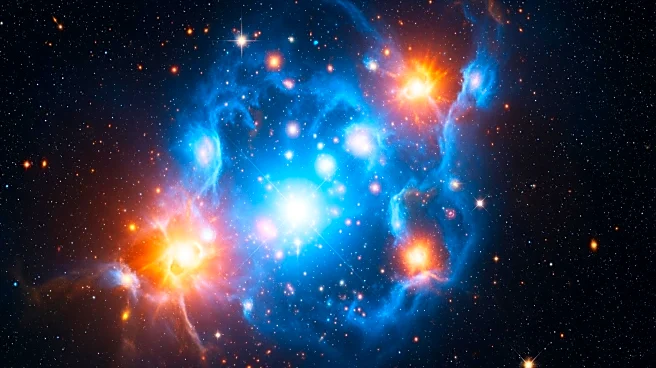
NASA's Chandra X-ray Observatory and James Webb Space Telescope have captured a stunning image of the young star cluster Pismis 24, located in the Lobster Nebula. The image combines data from both telescopes,
showcasing high-energy activity from active stars in the cluster. Pismis 24, approximately 5,500 light-years from Earth, is a vibrant stellar nursery and one of the closest sites of massive star birth. The combined observations provide valuable insights into the properties and evolution of hot young stars, contributing to our understanding of stellar formation and development.
Why It's Important?
The collaboration between Chandra and Webb telescopes in observing Pismis 24 highlights the importance of multi-wavelength astronomy in studying complex cosmic phenomena. By combining X-ray and infrared data, astronomers can gain a more comprehensive understanding of the processes occurring in star-forming regions. This approach allows for the exploration of different aspects of stellar evolution, such as the impact of high-energy activity on star formation and the surrounding environment. The findings from Pismis 24 could inform future studies of similar regions and enhance our knowledge of the lifecycle of stars.
Beyond the Headlines
The observations of Pismis 24 also underscore the potential for future collaborations between different space observatories to unlock new insights into the universe. The ability to integrate data from multiple sources can lead to breakthroughs in understanding the dynamics of star clusters and the conditions that lead to star formation. This collaborative approach could be applied to other astronomical studies, paving the way for new discoveries and advancements in the field. The success of this observation demonstrates the value of leveraging diverse technological capabilities to explore the cosmos.