




What's Happening?
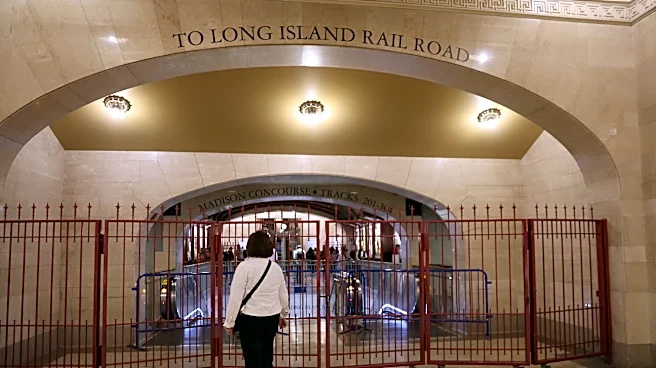
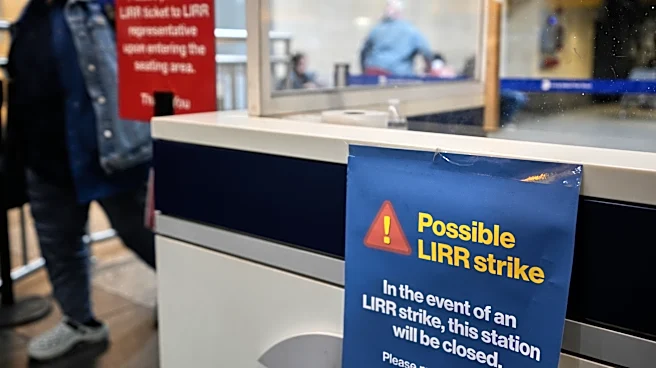
The National Mediation Board has intervened in the ongoing Long Island Rail Road (LIRR) strike, summoning the Metropolitan Transportation Authority (MTA) and the striking unions to a meeting in Manhattan. The strike, which began on Saturday, has brought
the nation's busiest commuter rail system to a halt, affecting approximately 300,000 daily riders. The labor action involves about 3,500 union workers, representing half of the LIRR workforce, who walked off the job after three years of unsuccessful contract negotiations. New York Governor Kathy Hochul has publicly urged both parties to return to the bargaining table, emphasizing the significant impact on commuters and the economy. The strike follows two previous federal interventions and a last-minute bargaining attempt that failed to yield an agreement.
Why It's Important?
The LIRR strike has significant implications for the New York metropolitan area, particularly for the daily commuters who rely on the rail service. The disruption affects not only the workers but also the broader economy, as it hinders the movement of people and goods. The strike highlights ongoing labor disputes over wages and healthcare premiums, reflecting broader national trends in labor relations. The intervention by the National Mediation Board underscores the critical nature of the situation and the need for a resolution to prevent further economic disruption. The outcome of these negotiations could set a precedent for future labor disputes in the transportation sector.
What's Next?
Negotiations are expected to resume, with the National Mediation Board facilitating discussions between the MTA and the unions. Governor Hochul has called for remote work accommodations to mitigate the impact on commuters. The MTA plans to provide limited shuttle bus services to assist essential workers, although these measures are not expected to fully replace the suspended rail service. The unions and the MTA must reach a compromise to restore normal operations and address the workers' demands. The situation remains fluid, with potential for further federal intervention if an agreement is not reached soon.