




What's Happening?
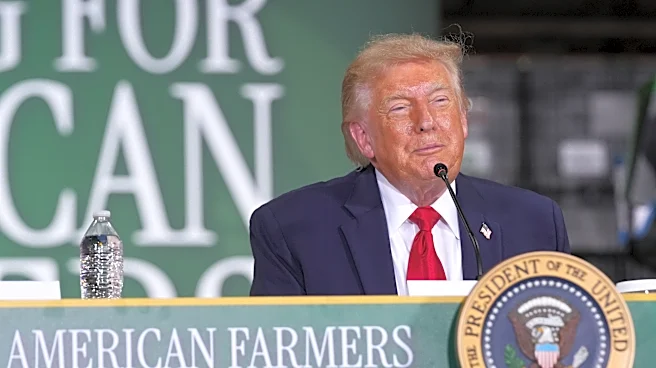
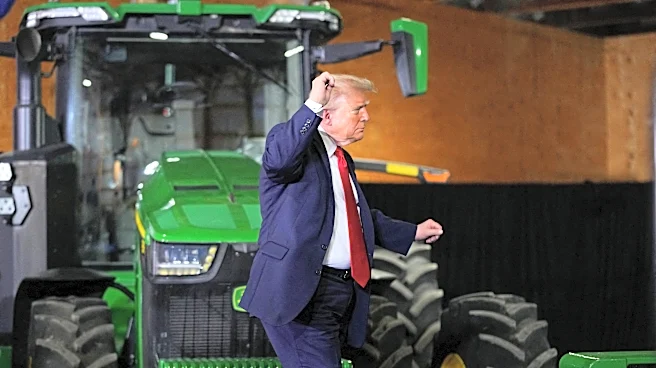
During a recent interview on Meet the Press, President Trump walked off the set after being challenged by moderator Kristen Welker on his claims of election fraud. Trump insisted that he and his supporters were victims of government retribution, describing
it as 'violent' and carried out by 'thugs' and 'dirty cops.' Welker attempted to address these claims, noting the lack of evidence and the fact that many pardoned by Trump had pleaded guilty to assaulting police officers during the Capitol riot. The interview highlighted Trump's continued rejection of unfavorable election results, a stance he has maintained since the 2016 election. This incident reflects a broader trend within the Republican Party, where election denial has become more prevalent.
Why It's Important?
The refusal to accept election results poses significant challenges to democratic processes and public trust in electoral systems. Trump's persistent claims of election fraud, despite lacking evidence, contribute to a polarized political environment and undermine confidence in democratic institutions. This rhetoric has influenced a segment of the Republican Party, leading to increased skepticism about election integrity. The situation underscores the need for clear communication and evidence-based discussions to maintain the integrity of democratic processes. The broader impact includes potential legislative and policy shifts as political leaders navigate these contentious narratives.
What's Next?
As the political landscape continues to evolve, the Republican Party faces internal divisions between those who support Trump's claims and those who advocate for evidence-based discourse. The upcoming elections will test the party's ability to reconcile these differences and present a unified front. Additionally, media outlets and political analysts will likely continue to scrutinize and challenge unfounded claims, emphasizing the importance of factual reporting. The ongoing dialogue around election integrity will remain a critical issue, influencing voter perceptions and engagement in future elections.