




What's Happening?
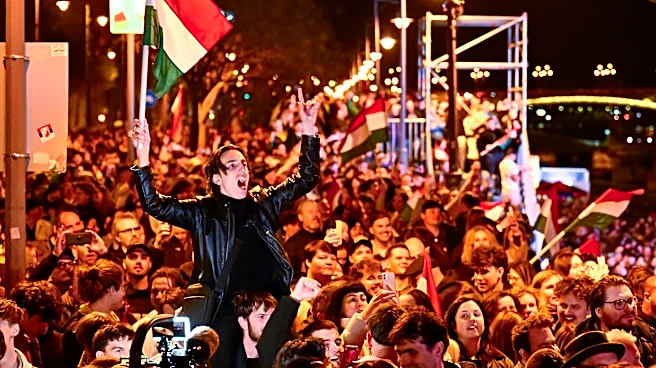
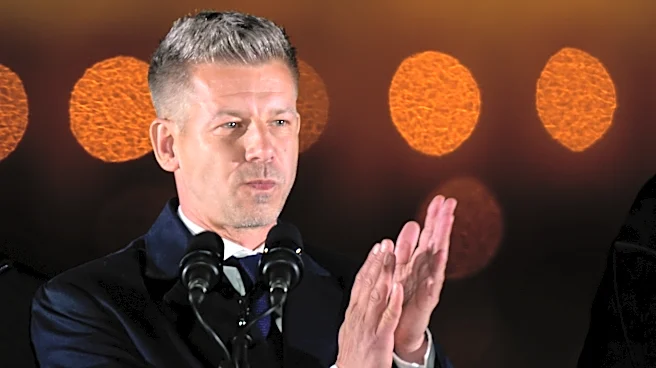
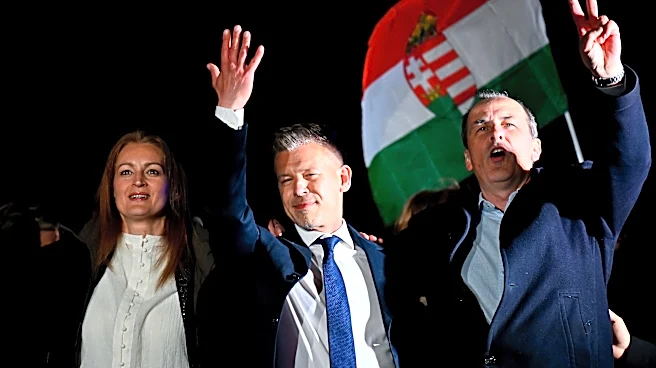
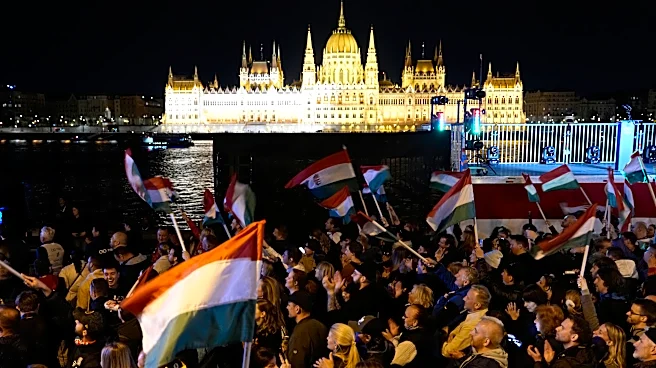
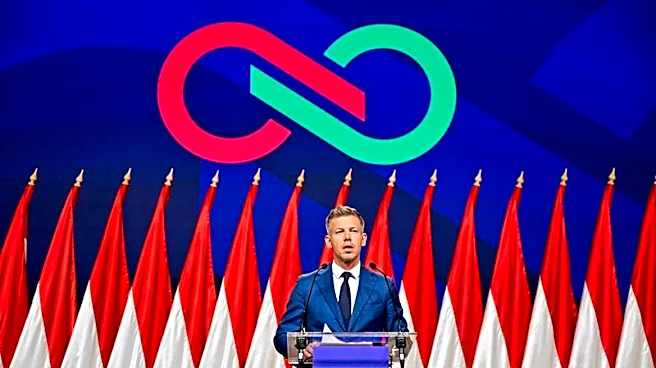
Hungarian opposition leader Péter Magyar announced that his new government could assume power in early May, following a meeting with President Tamás Sulyok. Magyar's center-right Tisza party secured a two-thirds majority in the recent elections, ending
Prime Minister Viktor Orbán's 16-year tenure. The transition is expected to occur swiftly, with the inaugural parliamentary session likely scheduled for May 6th or 7th. Magyar plans significant governmental reforms, including establishing separate ministries for health, environmental protection, and education. He also intends to suspend the state broadcaster's news programming until it meets standards of independence and impartiality.
Why It's Important?
This political shift marks a significant change in Hungary's governance, potentially altering its domestic and international policies. Magyar's victory and proposed reforms could impact Hungary's alignment within the European Union, especially concerning democratic norms and media freedom. The transition may also influence Hungary's economic policies, affecting both local and international stakeholders. The swift changeover reflects a strong mandate from the electorate, indicating a desire for change after years of Orbán's leadership.
What's Next?
The new government is expected to implement constitutional changes, leveraging its supermajority to reverse many of Orbán's policies. Magyar has called for the current administration to act as a caretaker and avoid decisions that could hinder the incoming government. The political landscape in Hungary may see further shifts as Magyar's administration begins to enact its agenda, potentially leading to changes in Hungary's relations with the EU and other international partners.