




What's Happening?
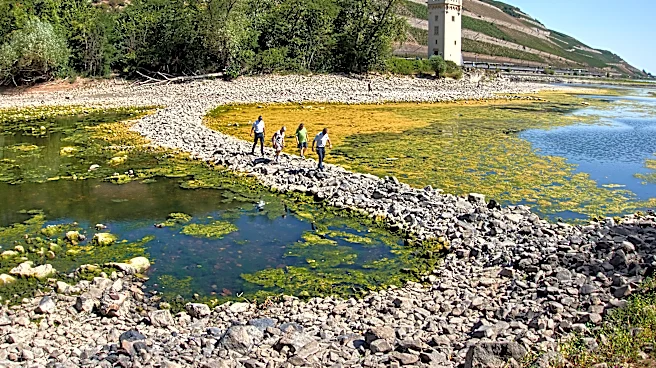
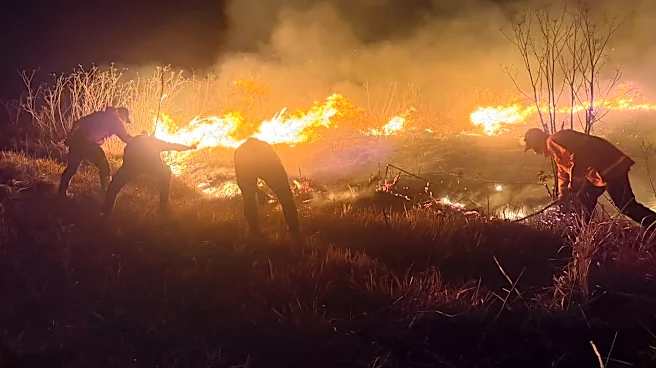
The El Niño Southern Oscillation (ENSO) is a significant climate phenomenon that affects global weather patterns, including rainfall, floods, and bushfires. ENSO has three phases: El Niño, La Niña, and Neutral. During El Niño, regions like Australia experience
warmer and drier conditions, increasing the risk of drought and bushfires. Conversely, La Niña brings higher rainfall and greater flood risk. The current ENSO event is being closely monitored by global forecasting agencies, with predictions of a 'Super El Niño' that could have far-reaching impacts on climate variables such as temperature and rainfall. Despite advances in forecasting, many aspects of ENSO remain poorly understood, including its evolution under climate change.
Why It's Important?
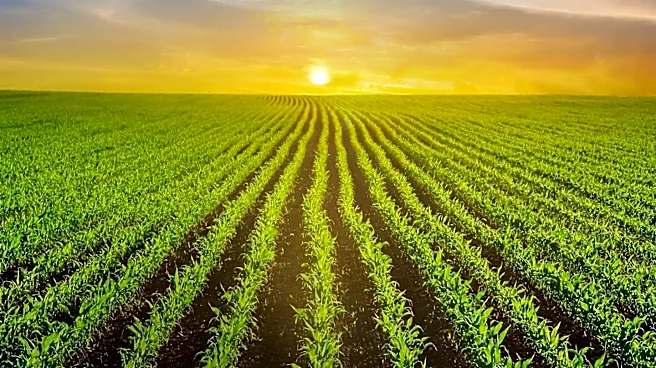
ENSO events have significant implications for global agriculture and economic stability. During severe El Niño episodes, production of key crops can be drastically reduced, leading to food shortages and inflation. For instance, the 2022 East Coast Floods in Australia resulted in over AUD 6 billion in insured losses. Understanding and predicting ENSO events are crucial for preparing and mitigating their impacts on agriculture, insurance, and regional economies. As climate change continues to reshape ENSO, the ability to accurately forecast and respond to these events becomes increasingly important for global food security and economic resilience.
What's Next?
The current El Niño event is expected to strengthen, with potential impacts on key regional climate variables. As global warming continues, ENSO's characteristics may change, necessitating ongoing research and adaptation strategies. Stakeholders, including governments and agricultural sectors, must prepare for potential disruptions in food production and economic activities. Improved forecasting and climate models will be essential in managing the risks associated with ENSO events.