



What's Happening?
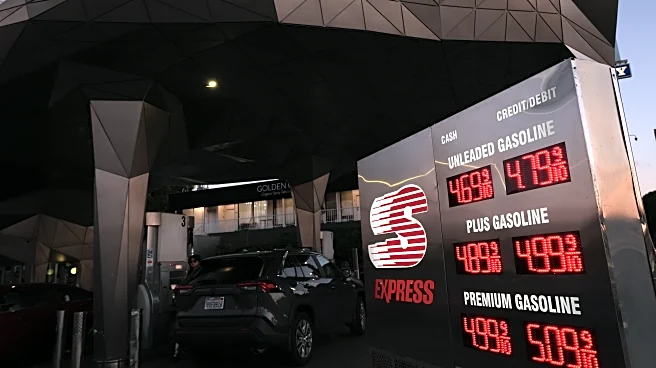
In Los Angeles, the price of regular gasoline has surged past $8 per gallon at certain stations, a significant increase that has caught the attention of drivers and social media users alike. This spike in prices is attributed to the ongoing conflict involving
Iran, which has led to oil prices exceeding $100 per barrel. The conflict has raised concerns about potential disruptions to global crude supplies, impacting fuel costs across the U.S. California, in particular, is experiencing these effects more acutely due to its reliance on a specialized cleaner-burning gasoline blend and its dependence on local refineries. While the average gasoline price in California is slightly above $5 per gallon, the outliers in Los Angeles have become a focal point in discussions about rising fuel costs.
Why It's Important?
The sharp increase in gasoline prices in Los Angeles highlights the vulnerability of fuel costs to geopolitical tensions, particularly in regions heavily reliant on specific fuel blends and local refineries. This situation underscores the broader economic impact of international conflicts on domestic markets, affecting consumers directly at the pump. The rise in fuel prices can lead to increased transportation costs, influencing the cost of goods and services across various sectors. For Californians, who often face the highest fuel prices in the nation, this development could strain household budgets and impact consumer spending. The situation also raises questions about energy security and the need for diversified energy sources to mitigate such price shocks.
What's Next?
As the conflict with Iran continues, there is potential for further increases in gasoline prices if global oil supplies remain uncertain. Analysts suggest that if the situation escalates, consumers could see even higher prices at the pump. This could prompt policymakers to explore measures to stabilize fuel costs, such as tapping into strategic reserves or encouraging alternative energy sources. Additionally, the ongoing price surge may lead to increased public discourse on energy policy and the importance of reducing dependency on volatile international oil markets.