






What's Happening?
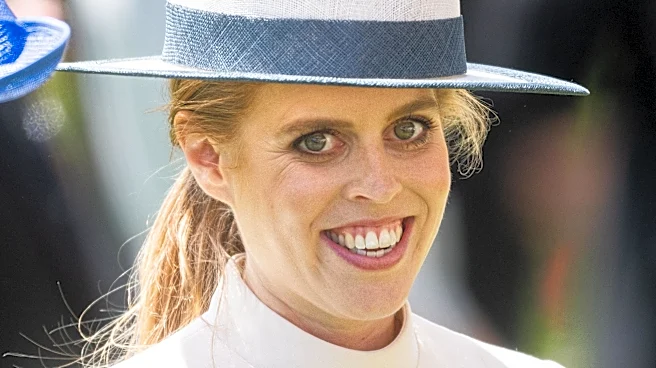
Princesses Beatrice and Eugenie have reportedly failed to regain public favor in the UK, according to a recent YouGov 'royal favourability' survey. The survey indicates that Princess Beatrice is liked by 29% of people and disliked by 31%, while Princess Eugenie is liked by 28%
and disliked by 31%. This continued negative perception is largely attributed to the ongoing fallout from the Epstein scandal, which has significantly impacted the entire York family. The princesses' recent public outing with their mother, Sarah Ferguson, following her return to the UK, is also noted as a potential factor that could further ignite public anger. Their continued support for their parents, who remain under scrutiny for their ties to Jeffrey Epstein, is seen as a contributing reason for their inability to win back public approval. King Charles and Prince William are reportedly unable to alter this public verdict.
Why It's Important?
The persistent public disfavor towards Princesses Beatrice and Eugenie highlights the long-lasting impact of scandals on the British monarchy and its individual members. Despite their distance from the direct controversies, their association with their parents continues to affect their public image and potential roles within the royal family. This situation underscores the critical importance of public perception for the monarchy's legitimacy and continued support. The survey results suggest that the public holds members of the royal family accountable for the actions and associations of their close relatives, even if indirectly. This ongoing negative sentiment could limit the princesses' ability to undertake significant public duties or represent the Crown effectively, potentially leading to a more marginalized role within the institution. It also reflects a broader societal expectation for accountability and transparency from public figures.
What's Next?
Given the current public sentiment, Princesses Beatrice and Eugenie may face continued challenges in improving their public image. Their future actions, particularly regarding their public support for their parents, will be closely watched and could further influence public opinion. It is unlikely that their favorability ratings will significantly improve as long as the Epstein scandal remains a prominent issue associated with their family. This could lead to a more subdued public profile for both princesses, with fewer official engagements or prominent roles within the royal family. The monarchy, as an institution, will likely continue to navigate how to manage the public perception of its extended members, especially those linked to past controversies, to protect its overall standing.
Beyond the Headlines
This situation reflects a broader societal shift where public figures, including royals, are increasingly held to account for their associations and family ties. It illustrates the enduring power of public opinion in shaping the roles and influence of individuals within traditional institutions. The inability of King Charles and Prince William to 'save' the princesses from public disfavor suggests a limitation on the monarchy's ability to control narratives in the modern era. It also raises questions about the long-term implications for the royal family's structure and who is deemed fit for public representation. The ongoing scrutiny of the York family serves as a reminder that past scandals can have generational consequences, impacting even those who were not directly involved but are connected by lineage.