




What's Happening?
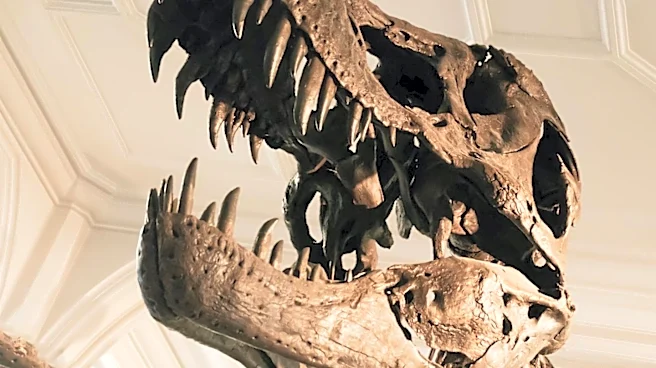
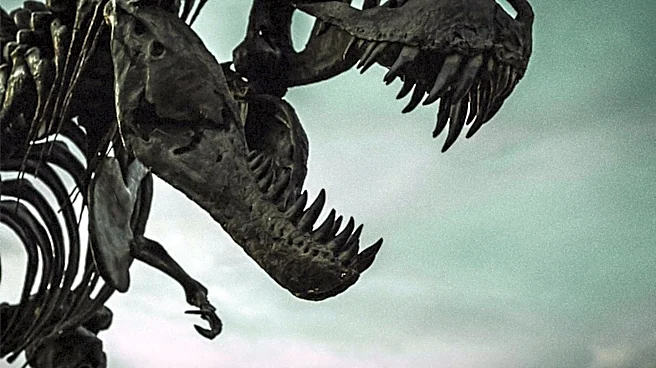
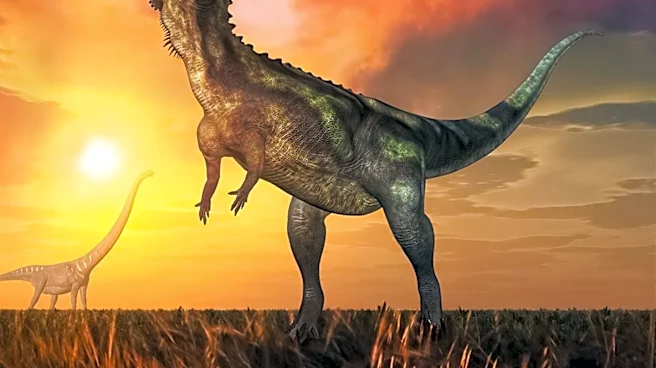
Researchers from the University of Cambridge and University College London have examined 82 species of theropods, a group of mostly carnivorous, two-legged dinosaurs. They found that reduced forelimbs evolved independently in at least five dinosaur lineages,
including tyrannosaurids, abelisaurids, carcharodontosaurids, ceratosaurids, and megalosaurids. This reduction in arm size was closely connected to the evolution of massive, powerful jaws and skulls, suggesting a major evolutionary shift in hunting strategy. As giant plant-eating dinosaurs became more common, predators may have relied less on grasping prey with claws and more on delivering devastating bites. The study indicates that skulls became stronger before the arms began shrinking, pointing to a shift in attack mechanisms.
Why It's Important?
This discovery sheds light on the evolutionary adaptations of carnivorous dinosaurs, particularly in their hunting strategies. Understanding these shifts can provide insights into the ecological dynamics of prehistoric times, including predator-prey relationships and survival strategies. The findings highlight the importance of skull robustness in the evolution of these species, which may have influenced their dominance as apex predators. This research contributes to the broader understanding of evolutionary biology and the factors driving morphological changes in species over time.