








What's Happening?
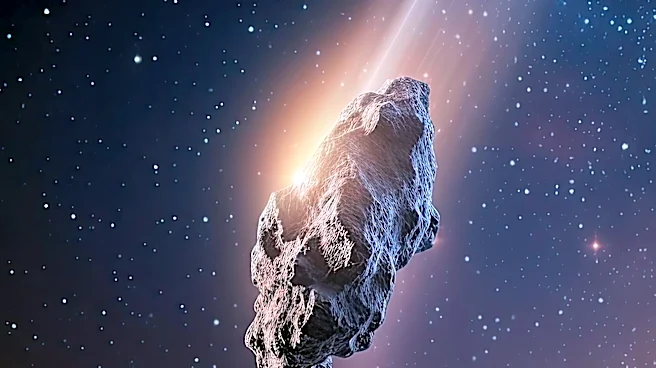
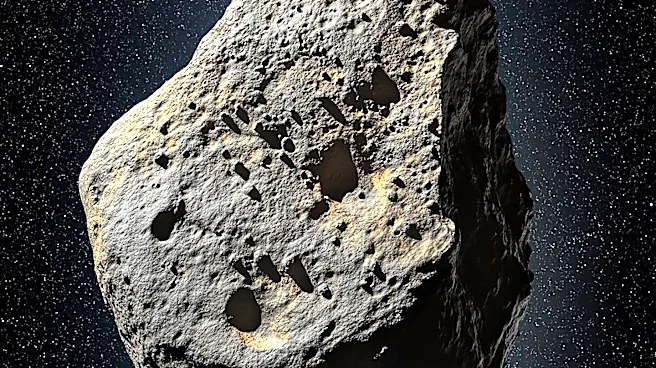
NASA scientists have gained new insights into the chemical evolution of primitive asteroids and the role of ancient water in the early solar system through the study of a meteorite that fell in Hillsborough, New Jersey, in 2024. The meteorite, quickly
recovered by an amateur astronomer, was preserved in a way that allowed researchers to analyze its delicate minerals and organic compounds. The study, published in Science Advances, revealed that ancient salty water had altered the minerals within the meteorite's parent asteroid, preserving unique minerals and a rich inventory of organic compounds. This meteorite, classified as a CM carbonaceous chondrite, contains some of the oldest materials in the solar system, providing a record of the chemical processes that shaped asteroids over 4.5 billion years ago.
Why It's Important?
The findings from the Hillsborough meteorite offer significant insights into the distribution of water and organic compounds in the early solar system, which are crucial for understanding the origins of life. The presence of ancient brines suggests that salt-rich water was more widespread among primitive asteroids than previously thought. This discovery provides a new perspective on how water and the building blocks of life were distributed across the solar system, potentially influencing the development of life on Earth. The study also highlights the importance of rapid recovery and preservation of meteorites to prevent contamination and ensure accurate scientific analysis.
What's Next?
Researchers will continue to study the Hillsborough meteorite to uncover more details about how water transformed primitive asteroids and shaped the early solar system. These ongoing studies aim to build a clearer picture of the chemical evolution of asteroids and the role of water in the distribution of life's building blocks. The findings could inform future missions and research focused on understanding the origins of life and the history of water in the solar system.
Beyond the Headlines
The study of the Hillsborough meteorite underscores the interdisciplinary nature of astromaterials research, involving astronomers, mineralogists, and organic chemists. This collaborative approach is essential for piecing together the complex history of water and organic compounds in the solar system. The research also highlights the potential for meteorites to provide valuable information about the chemical processes that occurred on asteroids, offering a window into the conditions that may have led to the emergence of life.