








What's Happening?
Oman has declared its commitment to ensuring free and safe navigation through the Strait of Hormuz, rejecting Iran-backed proposals to impose tolls on ships passing through this critical waterway. Omani Foreign Minister Badr al-Busaidi emphasized that
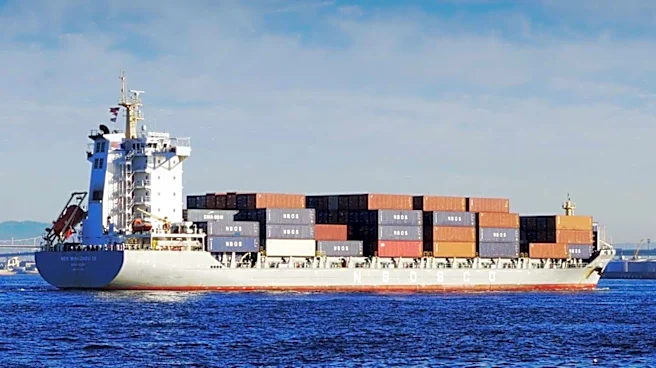
any agreements regarding the strait must adhere to international law, specifically the UN Convention on the Law of the Sea. This stance comes amid heightened tensions between the U.S. and Iran, with conflicting reports about an interim understanding aimed at halting attacks and reopening the strait. The strait is a vital passage for about a fifth of the world's oil and liquefied natural gas. France has pledged to assist in clearing mines from the strait to secure maritime routes, following discussions between French President Emmanuel Macron and Omani Sultan Haitham bin Tariq Al Said.
Why It's Important?
The Strait of Hormuz is a strategic chokepoint for global energy supplies, and any disruption could have significant implications for international oil markets and global economic stability. Oman's rejection of tolls and commitment to free navigation underscores the importance of maintaining open sea lanes in accordance with international law. This development is crucial for the U.S., which has a vested interest in ensuring the free flow of oil and gas through the strait. The ongoing tensions between the U.S. and Iran, and the involvement of other international players like France, highlight the geopolitical complexities surrounding this region. The situation could impact global energy prices and influence diplomatic relations among key stakeholders.
What's Next?
Technical teams from Iran and the U.S. are expected to meet in Doha to discuss the implementation of the interim agreement aimed at reducing tensions and ensuring the reopening of the strait. The U.S. has indicated that it will continue to uphold its end of the ceasefire, with high-level meetings planned in Doha. The outcome of these discussions could determine the future stability of the region and the security of the strait. Additionally, the release of Iranian assets frozen in Qatar, as part of the memorandum of understanding, could further influence Iran's economic and diplomatic strategies.