




What's Happening?
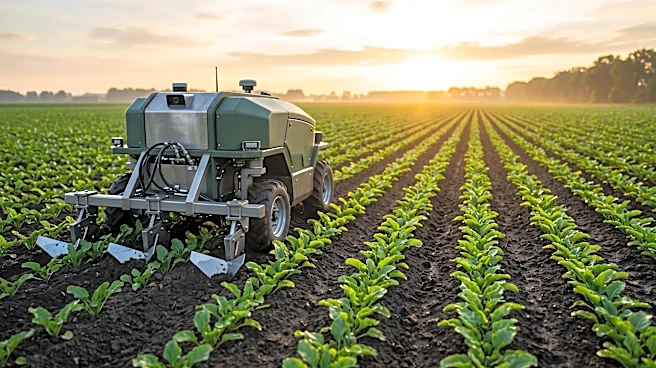
Researchers at Southern Illinois University Carbondale (SIU), led by Assistant Professor Billy Ram and doctoral student Samuel Singh, are developing an innovative AI-powered robot designed for the early detection of soybean diseases. This technology aims
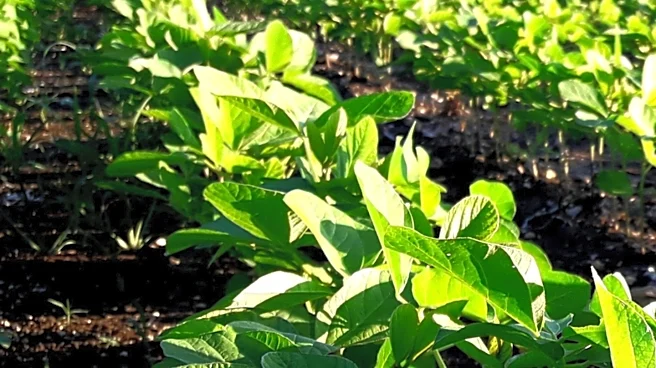
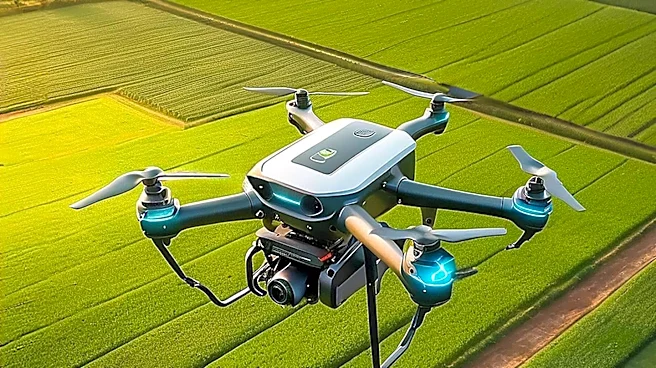
to identify plant diseases, such as frogeye leaf spot, before visible symptoms appear on the crop, which often leads to significant yield losses. The robot is battery-powered, equipped with GPS, multiple cameras, and autonomous navigation capabilities, allowing it to move through soybean rows, collect close-range images from various angles, and monitor individual plants. The team's goal is to develop advanced AI models that can accurately identify diseases and create disease maps, enabling farmers to apply fungicides precisely where needed, thereby reducing costs and improving efficiency.
Why It's Important?
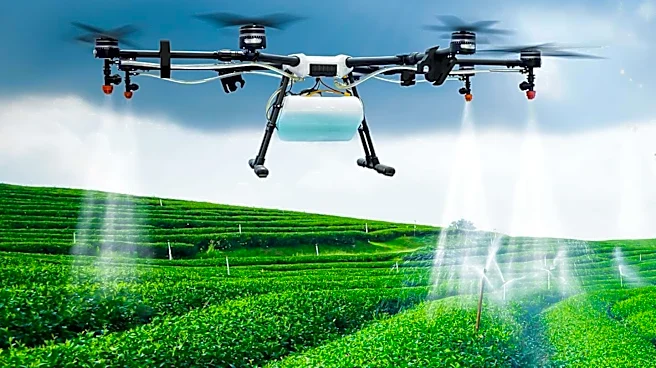
This research from Southern Illinois University is highly significant for the U.S. agricultural industry, particularly for soybean farmers. Soybean diseases, especially those caused by soil-borne fungi, can lead to substantial yield reductions and economic losses. Current detection methods often identify diseases too late for effective intervention. The AI robot's ability to detect diseases early and with high accuracy offers a proactive solution, allowing for timely and targeted fungicide applications. This precision agriculture approach can drastically reduce the amount of chemicals used, leading to environmental benefits and cost savings for farmers. Furthermore, by providing detailed disease maps, the technology empowers farmers to make more informed management decisions, enhancing crop health and overall productivity. This innovation could set a new standard for disease management in large-scale crop production, benefiting both individual farmers and the broader agricultural economy.
What's Next?
The next phase for the SIU research team will involve further developing and refining the AI models to enhance the accuracy of disease identification for frogeye leaf spot and potentially other soybean diseases. This will likely include extensive field testing to validate the robot's performance in diverse agricultural conditions. The researchers also aim to create user-friendly interfaces for the disease maps, making them easily accessible and actionable for farmers. Commercialization efforts may follow, potentially through partnerships with agricultural technology companies or equipment manufacturers, to bring this innovative solution to a wider market. As the technology matures, there could be an expansion of its application to other crops and disease types, further solidifying its impact on precision agriculture.
Beyond the Headlines
The development of this AI robot for early soybean disease detection has broader implications for the future of food security and sustainable agriculture. Ethically, by enabling precise fungicide application, it reduces the overall chemical footprint in farming, contributing to healthier ecosystems and potentially safer food products. This aligns with growing consumer demand for environmentally responsible agricultural practices. Legally, the use of autonomous robots in fields may necessitate new regulations concerning operational safety, data ownership, and privacy. Culturally, this technology represents a shift towards a more data-driven and technologically advanced farming paradigm, potentially attracting a new generation of tech-savvy individuals to agriculture. In the long term, such innovations could play a crucial role in addressing global food demand by minimizing crop losses and optimizing resource utilization, making agricultural systems more resilient and efficient.