








What's Happening?
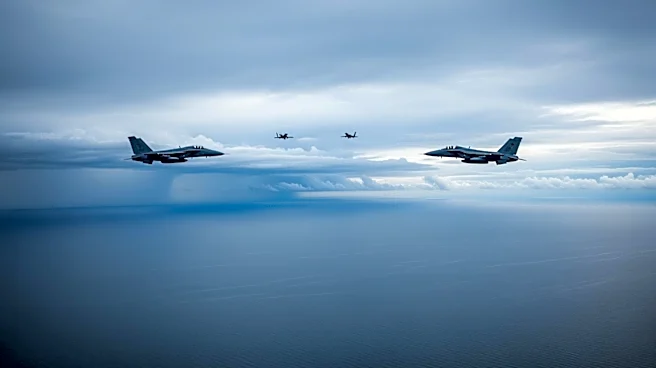
NATO conducted an air intercept operation in the Baltic Sea, where French Rafale jets intercepted Russian Il-20 reconnaissance aircraft and Russian Tu-22M3 bombers escorted by Su-30 and Su-35 fighters. The Russian aircraft did not have switched-on transponders,
file flight plans, or enter into radio contact. Fighter jets from Sweden, Finland, Poland, Denmark, and Romania also participated in the monitoring. The French commander, Lt. Col. Alexandre, expressed uncertainty about the Russian pilots' behavior but emphasized the necessity of intercepting them to ensure safety.
Why It's Important?
This incident highlights the ongoing tensions between NATO and Russia, particularly in the context of the conflict in Ukraine. The interception underscores the strategic importance of the Baltic region and the need for vigilance in monitoring airspace to prevent potential conflicts. The presence of multiple NATO countries in the operation reflects the alliance's commitment to collective defense and the security of its member states. The situation also raises questions about the professionalism and intentions of Russian military operations in the region.
What's Next?
NATO is likely to continue its air policing missions in the Baltic region to deter potential threats and reassure member states of their security. The alliance may also engage in diplomatic efforts to address the underlying tensions with Russia and seek to prevent further escalations. Additionally, NATO members may review and enhance their air defense capabilities to better respond to similar incidents in the future.