




What's Happening?
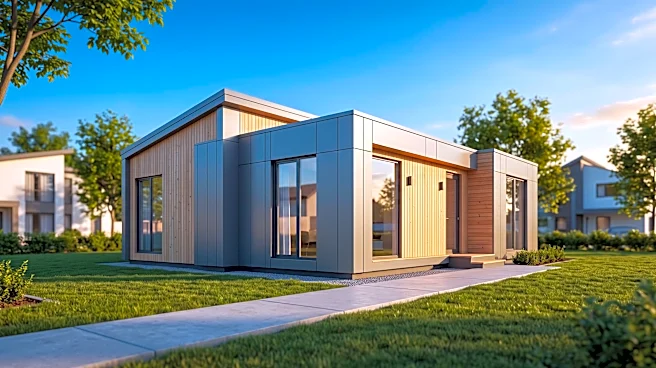
The U.S. Department of Housing and Urban Development (HUD), through its Office of Policy Development and Research (PD&R), is funding a 24-month project at Washington State University (WSU). The initiative aims to combine mass timber and light wood framing
into 'hybrid' modules for modular housing, with the explicit goal of reducing costs associated with production, transportation, and site assembly. The project seeks to achieve this by streamlining design and production time and by easing shipping and installation processes. HUD's focus is on treating transportation as a primary engineering requirement rather than a logistical afterthought, recognizing that even the cheapest modular unit to build can become the most expensive to move. The WSU project will involve a literature review, a survey of current practices, the design and demonstration of hybrid modules, and the creation of a design guide for construction workers and engineers. An expert stakeholder panel will also be part of the project's structure.
Why It's Important?
This research is critical for addressing the escalating costs and inefficiencies in housing construction, particularly in the modular sector. By focusing on optimizing the transportability of modular units, HUD and WSU are tackling a significant bottleneck that often undermines the cost-saving potential of modular construction. Reducing transportation and assembly costs can make modular housing more affordable and accessible, which is vital in addressing housing shortages across the U.S. The integration of mass timber and light wood framing offers potential benefits in terms of sustainability, structural integrity, and construction speed. Furthermore, by developing a design guide and involving an expert panel, the project aims to standardize best practices and facilitate broader adoption of these innovative construction methods, ultimately benefiting developers, builders, and prospective homeowners by delivering more cost-effective and efficient housing solutions.
What's Next?
Over the next 24 months, WSU will conduct its research, culminating in the design and demonstration of hybrid modular units and the publication of a comprehensive design guide. The project's findings are expected to influence future modular housing designs, emphasizing transport-friendly and easily assembled structures. This could lead to a shift in how modular housing is conceptualized and built, with a greater focus on integrated design for logistics. The involvement of an expert stakeholder panel suggests that the outcomes will be disseminated to industry professionals, potentially leading to widespread adoption of the new methodologies. Ultimately, the success of this project could pave the way for more efficient and affordable modular housing options, contributing to solutions for the national housing crisis.
Beyond the Headlines
The deeper implications of this project extend to the broader construction industry and environmental sustainability. By promoting mass timber, a renewable resource, the initiative aligns with efforts to reduce the carbon footprint of construction. The focus on modularity and efficient logistics also speaks to a future where construction is less wasteful, faster, and more adaptable to changing housing needs. This research could foster a paradigm shift from traditional, site-built construction to a more industrialized, factory-based approach, bringing benefits such as improved quality control, reduced labor costs, and enhanced safety. Moreover, by making housing more affordable through optimized construction, this project could contribute to greater housing equity and stability for communities nationwide.