





What's Happening?
Havana's urban development since 1959 showcases the profound influence of Soviet urban planning principles, adopted by the Cuban government in its pursuit of national sovereignty and an alternative to U.S. dependence. Following the Cuban Revolution, the island
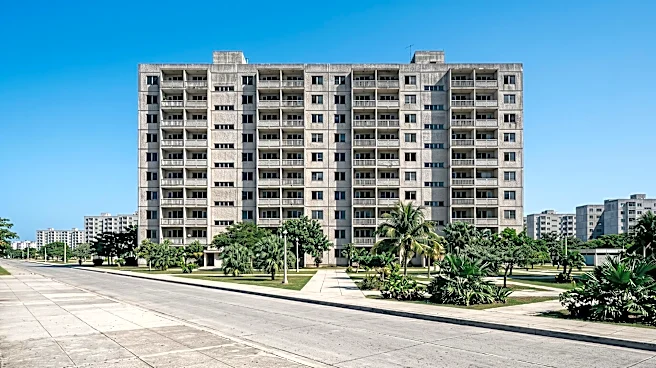
nation turned to the Soviet Union for support, leading to the transfer of Soviet models for housing, neighborhood units, and comprehensive master planning. This included the construction of new communities like Cojímar and Alamar, the establishment of state-run early childhood centers (círculos infantiles), and the repurposing of facilities such as Tarará. Cuban engineers and planners selectively adapted these Soviet techniques to local conditions, modifying prefabricated housing panels and integrating them into existing urban fabrics. Key initiatives included the 1963-64 socialist master plan for Havana, aimed at decreasing population growth and increasing green spaces, and the more ambitious 1971 Master Plan, which focused on integrating housing zones with production, teaching, and research centers. The formalization of Soviet-style administrative logic in Cuba was further cemented with the passing of the first Five-Year Plan in 1975, which included the organization of local authorities modeled after Soviet reforms.
Why It's Important?
The transformation of Havana's urban landscape is a significant case study in the export and adaptation of socialist planning models during the Cold War. It highlights how geopolitical alliances can profoundly shape a nation's physical and social infrastructure. For the U.S., this historical context is crucial for understanding the enduring complexities of U.S.-Cuba relations and the long-term impact of Cold War dynamics on regional stability. The selective adoption and adaptation of Soviet models by Cuban planners demonstrate the challenges of implementing foreign ideologies in diverse local contexts, revealing a tension between utopian aspirations and material realities. The resulting urban environment, characterized by both ambitious projects and persistent infrastructural issues, continues to influence the daily lives of Habaneros. This historical development underscores the lasting consequences of economic dependency and ideological alignment, offering insights into the resilience and struggles of a nation navigating post-revolutionary change and external influences.
What's Next?
The remnants of Soviet-inspired urban planning continue to shape Havana's present and future. Many Soviet-era buildings remain inhabited, albeit often in states of disrepair, reflecting the economic challenges faced by Cuba since the collapse of the Soviet Union and the subsequent 'Special Period.' The ongoing struggle with intermittent water and power supplies, deteriorating infrastructure, and abandoned public spaces indicates a need for significant investment and strategic urban renewal. Future developments in Havana will likely involve addressing these structural issues while navigating the complex legacy of its past. Potential reactions from international stakeholders, including the U.S., could involve discussions around infrastructure development, economic aid, and cultural preservation, especially as Cuba seeks to modernize its urban centers. The city's unique architectural and social fabric, a blend of pre-revolutionary, Soviet-influenced, and contemporary elements, will continue to evolve, presenting both challenges and opportunities for urban planners and residents alike.
Beyond the Headlines
The urban transformation of Havana under Soviet influence extends beyond mere architectural styles; it represents a profound attempt to engineer a new society and citizen. The emphasis on communal living, the liberation of women from domestic labor through collective services, and the integration of work and residence were all ideological tenets embedded in the urban design. However, the gap between these utopian visions and the material realities of economic constraints and resource scarcity led to significant contradictions. Residents often experienced the negative aspects of both urban and rural life, with new settlements failing to deliver promised social services. This historical experience offers a critical lens through which to examine the ethical implications of large-scale social engineering projects and the long-term human cost when such ambitions clash with practical limitations. The decaying infrastructure and unfulfilled promises in Havana serve as a tangible reminder of the complexities inherent in transferring development models across different socio-economic and cultural contexts, highlighting the enduring impact of political decisions on the built environment and the daily lives of its inhabitants.