




What's Happening?
On April 11, 2026, a 58-year-old man named Terry Meyers was arrested following a standoff that led to the closure of southbound lanes on Interstate 5 in Vancouver, Washington. The incident began when officers from the Vancouver Police Department responded
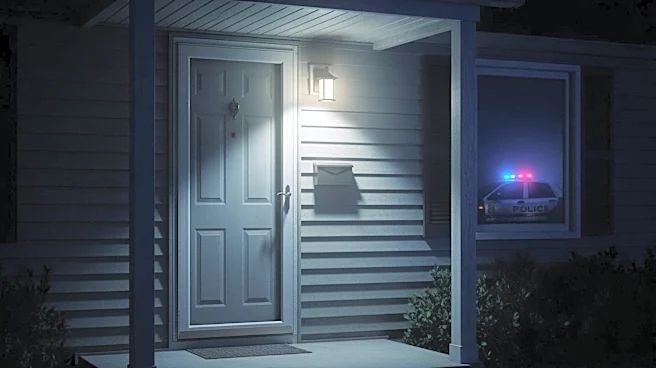
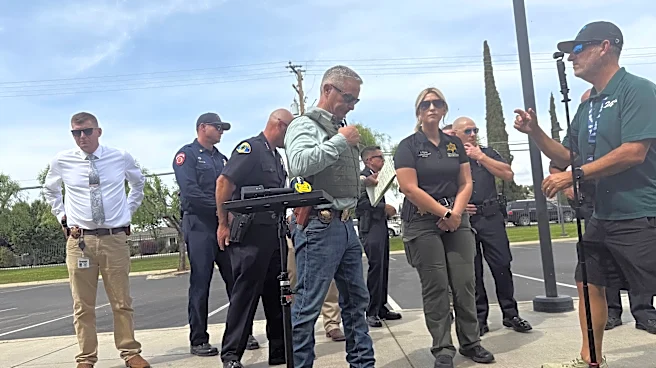
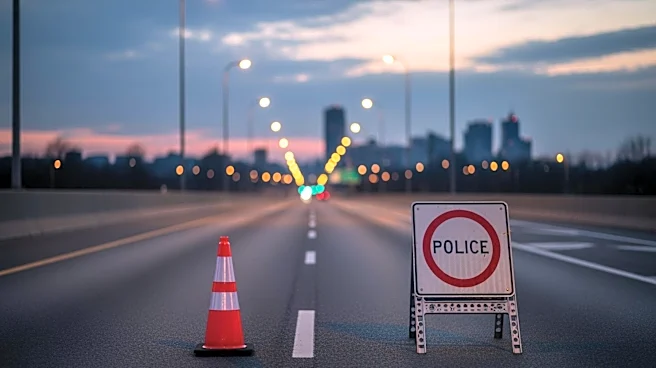
to a report from a resident at The Hudson apartments on East 13th Street. The resident claimed that Meyers had pointed a gun at them before retreating to his apartment. Tactical police units were deployed to the scene and attempted to contact Meyers. The standoff resulted in the closure of the freeway adjacent to the apartments for over an hour. Eventually, Meyers was taken into custody, and police discovered multiple firearms in his apartment. He was subsequently booked into the Clark County Jail on charges of second-degree and third-degree assault.
Why It's Important?
The arrest of Terry Meyers and the subsequent closure of a major interstate highlight the serious nature of the incident and its impact on local traffic and public safety. The presence of multiple firearms in Meyers' apartment raises concerns about gun safety and the potential for violence in residential areas. This event underscores the importance of effective law enforcement response to threats involving firearms, as well as the need for community vigilance in reporting suspicious activities. The closure of I-5, a critical transportation artery, disrupted travel and could have had economic implications for businesses relying on timely deliveries and commuter traffic.
What's Next?
Following the arrest, Terry Meyers will face legal proceedings related to the assault charges. The Vancouver Police Department may conduct further investigations to determine the full extent of Meyers' actions and any potential threats posed by the firearms found in his possession. Local authorities might also review security measures and community outreach programs to prevent similar incidents in the future. The case could prompt discussions on gun control and public safety policies within the community and potentially at the state level.