
What's Happening?
Deep Blue, the largest great white shark ever recorded, has returned to the spotlight following the release of footage by cinematographer Mike Bolton. Captured in 2013, the footage shows Deep Blue, estimated
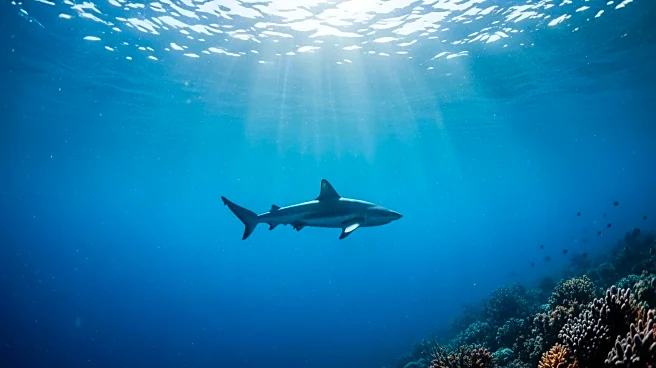
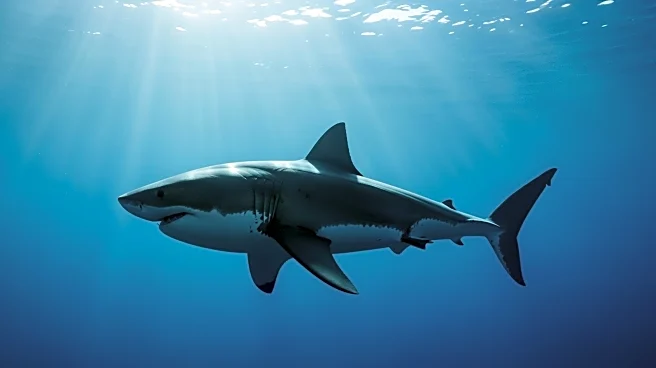
to be 20 to 21 feet long and weighing approximately 4,500 pounds, swimming near Mexico’s Guadalupe Island. The shark, believed to be between 50 to 60 years old, is described as the 'queen of the female great white sharks.' Bolton's footage, which was the first documented video evidence of Deep Blue, highlights the sheer size and power of the shark, as it dwarfs an open-top cage and interacts with a diver. The footage has reignited public fascination with Deep Blue, emphasizing the awe-inspiring nature of these marine predators.
Why It's Important?
The renewed interest in Deep Blue underscores the ongoing fascination with great white sharks and their role in marine ecosystems. As apex predators, great white sharks play a crucial role in maintaining the balance of marine life by controlling the population of other species. The attention on Deep Blue also highlights the importance of shark conservation efforts, as many shark species face threats from overfishing and habitat loss. By raising awareness about these majestic creatures, the footage can contribute to conservation initiatives aimed at protecting shark populations and preserving marine biodiversity.
What's Next?
The resurgence of interest in Deep Blue may lead to increased efforts in shark research and conservation. Scientists and conservationists could use this opportunity to advocate for stronger protections for shark habitats and stricter regulations on shark fishing. Additionally, the public's fascination with Deep Blue could inspire educational programs and documentaries that promote understanding and appreciation of sharks. As more people become aware of the ecological importance of sharks, there may be greater support for policies that ensure their survival.