
What's Happening?
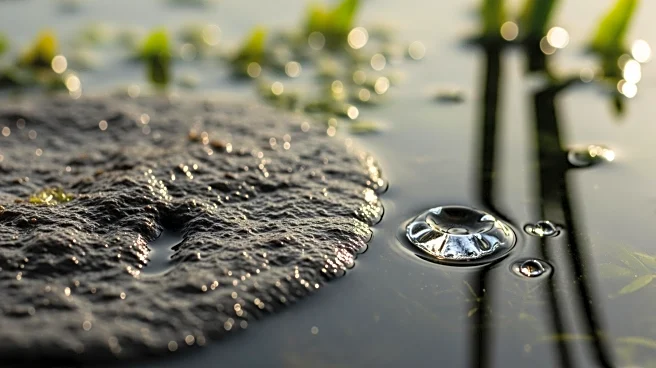
Researchers have discovered a novel method to purify water using naturally formed sludge from wetlands. This sludge has been shown to effectively remove dyes and heavy metals, such as methylene blue and lead,
from wastewater. Unlike traditional water treatment methods that rely on energy-intensive processes, this approach utilizes the natural properties of wetland sludge, which forms without human intervention. The study, published in Scientific Reports, highlights the sludge's potential as a cost-effective and low-energy solution for water purification. The sludge, collected from a wetland near Egypt's Ismailia Canal, was processed into a fine powder and tested for its adsorption capabilities. The results demonstrated high removal capacities for both methylene blue and lead ions, attributed to the sludge's high surface area and active functional groups.
Why It's Important?
This development is significant as it offers a sustainable alternative to conventional water treatment methods, which often require substantial energy and resources. The use of naturally formed sludge could be particularly beneficial in regions with limited access to energy and infrastructure. By harnessing the natural pollutant-binding capabilities of wetland sludge, this method provides a low-cost solution that could improve water quality and reduce environmental pollution. The reusability of the sludge, retaining around 80% of its capacity after multiple cycles, further underscores its practicality and potential for widespread application.
What's Next?
While promising, the large-scale application of this method faces challenges, such as variability in sludge composition and logistical issues related to collection. Future research may focus on optimizing the process, possibly through solar-assisted drying and regional sourcing strategies, to enhance its sustainability and scalability. If these challenges are addressed, this approach could revolutionize wastewater treatment, particularly in developing regions where traditional methods are not feasible.
Beyond the Headlines
The use of natural sludge for water purification also raises interesting questions about the role of ecosystems in providing sustainable solutions to environmental challenges. This approach highlights the potential of leveraging natural processes and materials to address human needs, promoting a more harmonious relationship with the environment. Additionally, it underscores the importance of preserving natural ecosystems, such as wetlands, which could serve as valuable resources for future innovations.