





What's Happening?
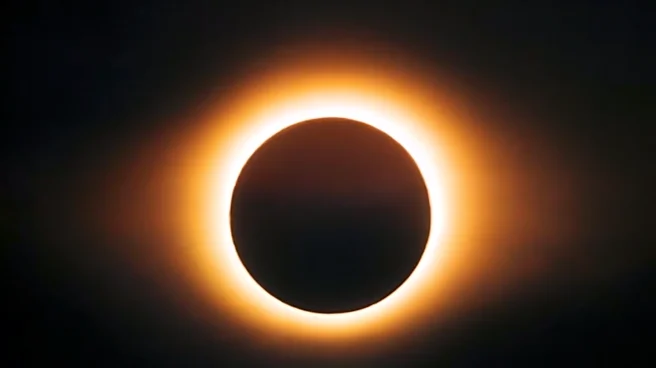
On August 12, 2026, a total solar eclipse will occur, marking the first time in 28 months that the Moon's shadow will sweep across Earth. The eclipse will be visible over Greenland, Iceland, and Spain, with the maximum duration of totality reaching 2 minutes
and 18 seconds off the west coast of Iceland. This celestial event coincides with the peak of the Perseid meteor shower, offering a unique opportunity for sky-watchers. The eclipse path will begin in northern Siberia and travel southeast across the North Atlantic, affecting regions in Greenland, Iceland, and Spain. The event will provide a rare opportunity to observe both a total solar eclipse and a meteor shower under optimal viewing conditions.
Why It's Important?
This rare alignment of a total solar eclipse and the Perseid meteor shower presents a unique opportunity for astronomers and the general public to witness two significant celestial events simultaneously. The total solar eclipse will offer a chance to observe the Sun's corona and experience the dramatic changes in light and temperature associated with totality. Meanwhile, the Perseid meteor shower, known for its high meteor rates, will be visible under the darkest possible conditions due to the new moon. This alignment enhances the visibility of meteors, providing an exceptional viewing experience for enthusiasts and researchers alike.
What's Next?
As the eclipse approaches, authorities in the affected regions are preparing for increased tourism and public interest. Safety measures, such as the use of certified eclipse glasses, are being emphasized to prevent eye damage during the partial eclipse phases. The event is expected to draw significant attention from both local and international visitors, particularly in Spain, where it will be the first total solar eclipse in over a century. The next total solar eclipse will occur in August 2027, but it will not coincide with the Perseid meteor shower, making this year's event particularly special.