
What's Happening?
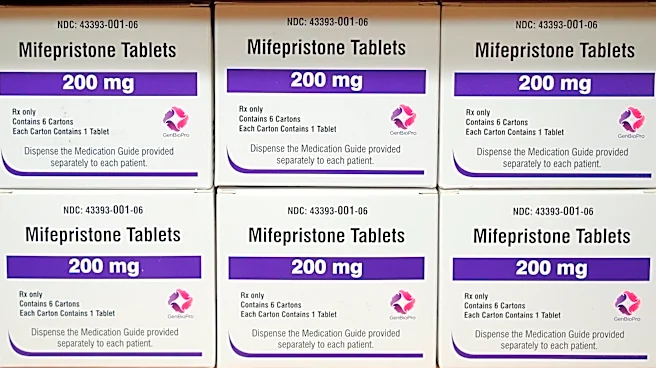
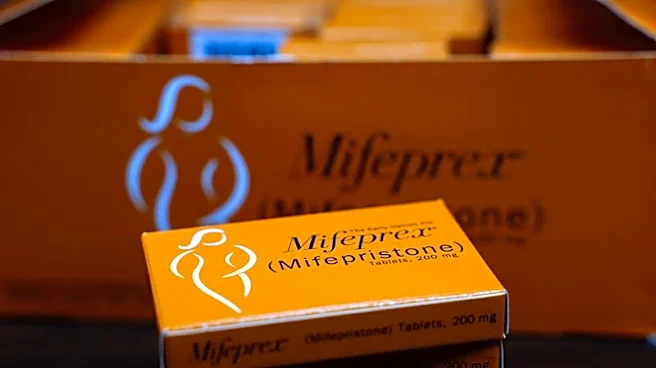
The U.S. Supreme Court has issued an administrative stay that temporarily restores mail and telemedicine access to mifepristone, a drug used in combination with misoprostol to terminate early pregnancies.
This decision comes after the Fifth Circuit Court of Appeals imposed restrictions on the mail-order distribution of mifepristone nationwide. The legal battle began when Louisiana challenged the FDA's 2023 modification of the Risk Evaluation and Mitigation Strategies (REMS) for mifepristone, which had removed the in-person dispensing requirement. The Fifth Circuit's ruling temporarily reinstated these requirements, citing potential harm to Louisiana's ability to regulate abortions. The Supreme Court's stay allows the continued use of telemedicine and mail distribution of mifepristone until May 14, pending further review.
Why It's Important?
This legal development is significant as it impacts access to abortion medication across the United States, particularly in states with restrictive abortion laws. The Supreme Court's decision to temporarily restore mail access to mifepristone highlights the ongoing tension between state regulations and federal drug oversight. If the Fifth Circuit's order is upheld, it could severely limit access to mifepristone, even in states where abortion remains legal, by requiring in-person dispensing. This case underscores the broader national debate over reproductive rights and the role of federal agencies in regulating medication access.
What's Next?
The Supreme Court's temporary stay is set to expire on May 14, and further legal proceedings are expected. The outcome of this case could set a precedent for how states can regulate access to federally approved medications. Health care providers and telemedicine platforms are closely monitoring the situation, as a decision to uphold the Fifth Circuit's ruling could necessitate significant changes in how mifepristone is prescribed and distributed. The case also highlights the potential for further legal challenges from other states with restrictive abortion laws.