
What's Happening?
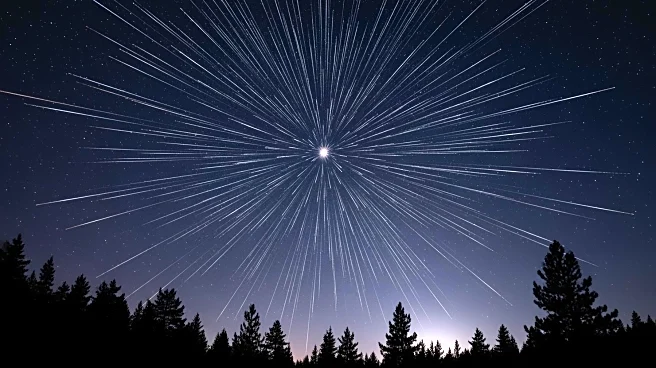
The Quadrantid meteor shower, one of the year's most dramatic celestial events, is set to peak in early January. Known for its brief but intense display, the Quadrantids can produce up to 100 meteors per
hour. This meteor shower is named after the now-defunct constellation Quadrans Muralis and is associated with the asteroid 2003 EH1. The shower is primarily visible from the Northern Hemisphere, with the best viewing conditions occurring away from city lights. However, this year's full moon may hinder visibility, making it challenging to spot the fainter meteors.
Why It's Important?
The Quadrantid meteor shower offers a unique opportunity for skywatchers and astronomy enthusiasts to witness a natural spectacle. Despite the potential visibility challenges posed by the full moon, the event highlights the ongoing interest in celestial phenomena and the public's engagement with astronomy. The meteor shower also serves as a reminder of the dynamic nature of our solar system and the historical significance of celestial events, as the Quadrantids are believed to be remnants of a comet observed over 500 years ago.
What's Next?
Observers are advised to find dark, remote locations to maximize their chances of seeing the meteor shower. While the full moon may obscure some of the fainter meteors, experienced skywatchers may still catch glimpses of brighter fireballs. The event encourages public interest in astronomy and may inspire future observations and studies of meteor showers and their origins.