



What's Happening?
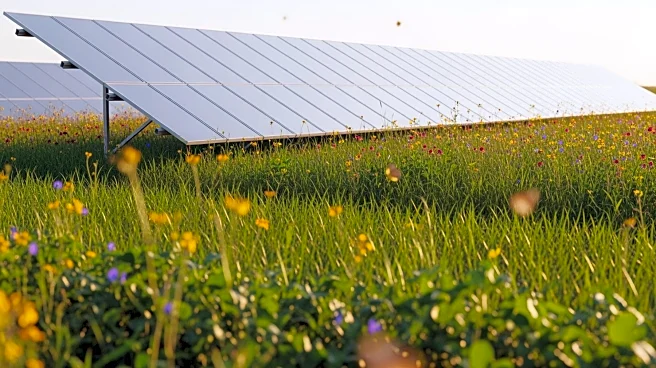
The integration of solar panels on large agricultural farms has led to unexpected environmental benefits, transforming these areas into natural havens for bees and enhancing soil conditions. Initially aimed at expanding clean energy generation, the installation
of solar panels has also contributed to ecological balance and agricultural productivity. Over the past five years, these areas have become refuges for bees, indicating that agriculture and renewable energy can coexist with significant environmental gains. The practice, known as agrophotovoltaics, has been gaining traction due to technological advancements and cost reductions since 2018. The solar panels create partial shade, reducing water evaporation and protecting plants from excessive heat, which helps retain soil moisture and thermal stability, favoring crop development.
Why It's Important?
The adoption of agrophotovoltaics presents a dual benefit of economic and environmental gains. By integrating solar panels, farms not only generate clean energy but also improve agricultural productivity and biodiversity. The presence of bees, attracted by the favorable conditions under the panels, enhances pollination, leading to better crop yields and natural pest control. This reduces the need for chemical pesticides, lowering costs and environmental impacts. The model offers farmers a supplementary income source through solar energy production while preserving biodiversity. As the technology advances, this approach could become more widespread, promoting sustainable agriculture and energy production.
What's Next?
The continued development and implementation of agrophotovoltaics are likely to expand as technology improves and costs decrease. Taller panels and adjustable modules compatible with agricultural machinery are expected to enhance the integration of solar energy with farming practices. This model could serve as a blueprint for sustainable agriculture, combining economic returns with environmental preservation. Researchers and rural producers may continue to explore and refine this approach, potentially influencing agricultural policies and practices globally.
Beyond the Headlines
The success of agrophotovoltaics highlights the potential for innovative solutions to address both energy and agricultural challenges. By demonstrating that renewable energy and agriculture can coexist beneficially, this model challenges traditional views on land use and resource management. It underscores the importance of interdisciplinary approaches in tackling complex environmental issues and could inspire similar initiatives in other sectors. The long-term implications include a shift towards more sustainable and resilient agricultural systems that prioritize ecological balance and resource efficiency.