



What's Happening?
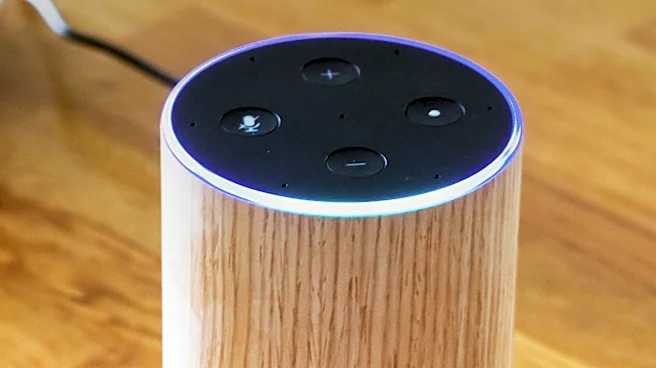
William Tunstall-Pedoe, a co-creator of Amazon's Alexa, has expressed skepticism about the claim that AI has reached the singularity, a point where it surpasses human intelligence. Responding to OpenAI CEO Sam Altman's assertion on a podcast, Tunstall-Pedoe argues
that while AI continues to advance, the idea of runaway AI with intelligence far beyond human capability is currently implausible. He notes that machines have outperformed humans in specific tasks for decades, but the leap to a singularity involves AI independently generating and evaluating paradigm-shifting ideas, which is not yet evident.
Why It's Important?
The debate over AI singularity is significant as it influences public perception and policy regarding AI development. If AI were to reach singularity, it could lead to unprecedented changes in technology and society, raising ethical and control concerns. Tunstall-Pedoe's skepticism suggests that while AI will continue to evolve, fears of an uncontrollable AI future may be premature. This perspective could impact how resources are allocated for AI research and development, emphasizing practical applications over speculative advancements.
What's Next?
As AI technology progresses, the conversation around singularity will likely persist, with experts and stakeholders examining the implications of AI's capabilities. Future developments may focus on ensuring AI systems are designed with safety and ethical considerations in mind. The tech industry and policymakers may need to collaborate on frameworks that balance innovation with oversight to prevent potential risks associated with advanced AI systems.