
What's Happening?
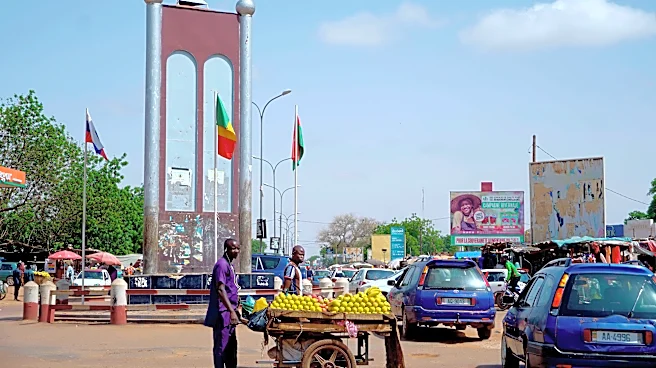
Niger's military government, led by General Abdourahamane Tiani since the July 2023 coup, successfully thwarted an attempted coup last Saturday in Niamey. Russian paramilitaries, specifically soldiers
from the Russian Defence Ministry's Africa Corps, played a crucial role in helping loyalist forces crush the uprising. Mutinous soldiers targeted strategic sites including the airport's Base 101, the presidential palace, and national television. While the Nigerien Ministry of Defence initially attributed the violence to a 'spontaneous outburst,' an analyst from the Bonn International Centre for Conflict Studies, Yvan Guichaoua, suggests the coordinated attacks on key locations indicate an attempted coup. The rebels were eventually driven from Base 101, with reports indicating the use of kamikaze drones by Russian forces to compel their surrender. This incident marks the most serious internal challenge to General Tiani's regime since he came to power, further solidifying Niger's reliance on Russia and distancing it from Western partners like France.
Why It's Important?
This event is significant as it highlights the increasing geopolitical shift in the Sahel region, with Niger moving further into Russia's sphere of influence and away from traditional Western alliances. The direct operational involvement of Russian forces in quelling an internal uprising demonstrates a deepening military partnership, which has implications for regional stability and counter-terrorism efforts. The reliance on external military support, particularly from Russia, could weaken the Nigerien army's internal cohesion and its ability to combat jihadist groups independently. This increased dependence on Russia may also lead to a reduction in transparency and accountability, as the regime prioritizes its survival. For the U.S. and its allies, this development signifies a loss of influence in a strategically important region and raises concerns about the spread of Russian military presence and its potential impact on democratic governance and human rights.
What's Next?
In the short term, General Tiani's regime has secured its position, but the attempted coup exposes underlying fragilities within the military. The increased dependence on Russia means Tiani now owes the Russians, potentially leading to further concessions or deeper military cooperation. The incident is likely to prompt the regime to implement more 'coup-proofing' measures, diverting resources from combating jihadist groups to internal security. This could create vulnerabilities in the fight against terrorism, as the army becomes more focused on internal threats. The long-term consequences include a potential increase in jihadist activity due to a weakened and internally divided army, and a further entrenchment of Russian influence in Niger. The international community, particularly Western nations, will need to reassess their engagement strategies in the Sahel, considering the growing Russian presence and the complex internal dynamics of these military governments.
Beyond the Headlines
The failed coup in Niger, and the subsequent Russian intervention, underscores a broader trend of shifting alliances and the re-scramble for influence in Africa. The operational involvement of Russia's Africa Corps marks a significant escalation from previous training and intelligence roles, indicating a more direct and assertive Russian foreign policy in the continent. This development raises ethical questions about the nature of military assistance and its impact on national sovereignty and democratic aspirations. The internal divisions within the Nigerien army, coupled with the external support for the ruling junta, create a complex environment where the lines between legitimate governance and authoritarian rule become blurred. The long-term implications could include a decline in human rights, increased political repression, and a more entrenched military rule, as regimes prioritize external support for survival over the welfare of their citizens. This situation also highlights the challenges faced by Western democracies in countering the growing influence of authoritarian powers in regions critical for global security.