







What's Happening?
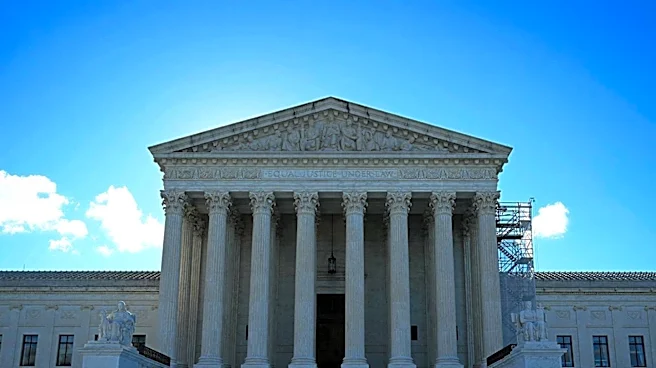
Supreme Court Justice Elena Kagan has declined to intervene in a custody dispute involving a surrogate mother, McKenna West, and the biological parents, Omar Ahmed and Nausheen Gilkar. The case centers on a child born in Texas after West refused the California
couple's request for an abortion. The child was born with hypoplastic left heart syndrome, a life-threatening condition. West had sought conservatorship over the child, whom she calls Gabriel, while the biological parents refer to him as Rumi. Multiple courts have previously rejected West's attempts to have a say in the child's medical treatment. The biological parents' attorney stated their gratitude that the child can continue receiving necessary treatment under their care. The decision by Justice Kagan, who handles appeals from California, was issued without detailed legal reasoning, which is typical for emergency appeals.
Why It's Important?
This decision by Justice Kagan is significant as it keeps the U.S. Supreme Court out of a complex and nationally watched case that intertwines issues of surrogacy, parental rights, and abortion. The dispute highlights the legal and ethical challenges that can arise in surrogacy arrangements, particularly when medical complications or disagreements over the pregnancy's continuation occur. The case also underscores the jurisdictional complexities that can emerge when parties reside in different states with varying laws regarding abortion and parental rights. The outcome impacts the biological parents' ability to continue providing care for their child without further legal challenges from the surrogate, and it reinforces the existing court orders that recognize Ahmed and Gilkar as the child's parents. The case has drawn attention from anti-abortion groups and Republican officeholders, indicating its broader societal and political implications.
What's Next?
With Justice Kagan's denial of intervention, the existing California court order recognizing Omar Ahmed and Nausheen Gilkar as the child's parents remains in effect. This means the biological parents will continue to have custody and make medical decisions for their child. The child, who was born with a severe heart condition, has already undergone surgery and requires ongoing medical care. The legal battle, which has seen multiple courts reject McKenna West's efforts, appears to have reached a significant point of resolution at the Supreme Court level, at least for now. While attorneys for West did not immediately comment, the biological parents' legal team expressed relief that their child's care will not be disrupted. The broader implications for surrogacy law and the rights of surrogates versus biological parents may continue to be debated in other legal and legislative forums.
Beyond the Headlines
The case delves into profound ethical and legal questions surrounding reproductive rights, the definition of parenthood, and the autonomy of surrogates. The initial request by the biological parents for an abortion due to the child's heart defect, followed by the surrogate's refusal and subsequent birth in Texas, highlights the clash between differing moral and legal perspectives on life and medical intervention. The dispute also brings to light the potential for emotional and legal complexities in surrogacy agreements, especially when unforeseen medical conditions arise. The involvement of anti-abortion groups and political figures underscores the highly charged nature of these issues in the U.S. The case could contribute to future discussions and potential legislative efforts to clarify laws governing surrogacy contracts, parental rights, and medical decision-making in such arrangements, particularly across state lines with differing legal frameworks.